
Excavation plays a crucial role in nearly every construction or landscaping project. Whether you’re installing utilities, digging for a foundation, or managing drainage, the method you choose can significantly affect the project’s safety, cost, and outcome.
Over the past decade, many Ontario homeowners have started exploring hydro excavation as an alternative to traditional mechanical digging. This modern method uses high-pressure water and a powerful vacuum to remove soil safely and precisely. It’s now one of the most requested excavation services for both residential and commercial projects because of its accuracy, safety, and reduced environmental impact.
At M. Riddle Excavating, we’ve seen a steady increase in homeowners choosing hydro excavation across Kingston, Napanee, and Frontenac. But while the advantages are impressive, this technique isn’t right for every job. To make the best decision for your property, it’s important to understand both the benefits and potential drawbacks.
What Is Hydro Excavation?
Hydro excavation combines pressurized water with a vacuum system to dig and remove soil. The water loosens the ground while the vacuum transfers the slurry into a debris tank. This approach eliminates the need for backhoes or mechanical excavators in delicate or high-risk areas.
Initially developed for utility and industrial applications, hydro excavation has become increasingly common in residential projects throughout Eastern Ontario. It’s particularly useful for:
- Exposing buried utilities safely (“daylighting”)
- Digging precise trenches for lines and pipes
- Installing fence posts, poles, and small foundations
- Working in frozen ground during winter
- Cleaning and shaping ditches or culverts
Because it uses water instead of brute force, hydro excavation provides more control in environments where accuracy and safety matter most.
The Pros of Hydro Excavation
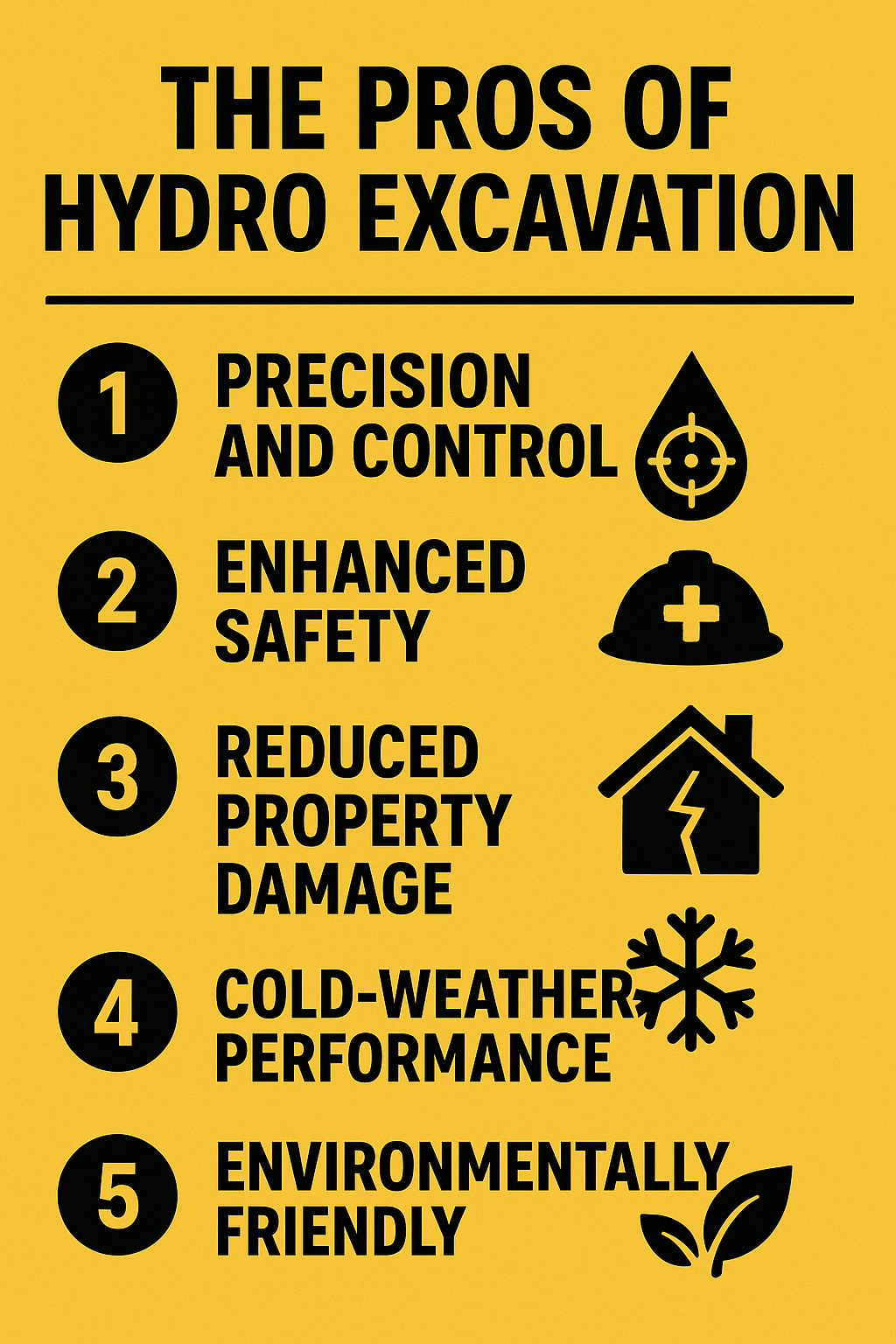
1. Precision and Control
Hydro excavation delivers unmatched accuracy. Operators can target a specific area without disturbing nearby soil, tree roots, or existing infrastructure. This makes it ideal for urban projects or established residential lots where space is limited and underground utilities are common.
2. Enhanced Safety
Safety is one of the top reasons property owners choose hydro excavation. The method drastically reduces the risk of striking gas, electrical, or communication lines. When paired with proper utility locates, it creates one of the safest excavation environments possible.
3. Reduced Property Damage
Because hydro excavation doesn’t rely on heavy mechanical force, it leaves far less surface disturbance. Lawns, driveways, and landscaped areas remain largely intact, and there’s little soil compaction. Cleanup and restoration take less time, saving property owners money in the long run.
4. Cold-Weather Performance
Ontario winters can bring projects to a halt when frost hardens the ground. Hydro excavation trucks equipped with heated water systems can cut through frozen soil efficiently, allowing work to continue through winter months without waiting for thaw conditions.
5. Environmentally Friendly
Hydro excavation produces less dust, noise, and soil displacement than traditional digging. Since it uses water and vacuum rather than friction or fuel-driven cutting, it reduces emissions and minimizes runoff pollution. It’s the preferred method in sensitive environments, such as near wetlands or waterfront properties, where soil and groundwater protection are priorities.
The Cons of Hydro Excavation
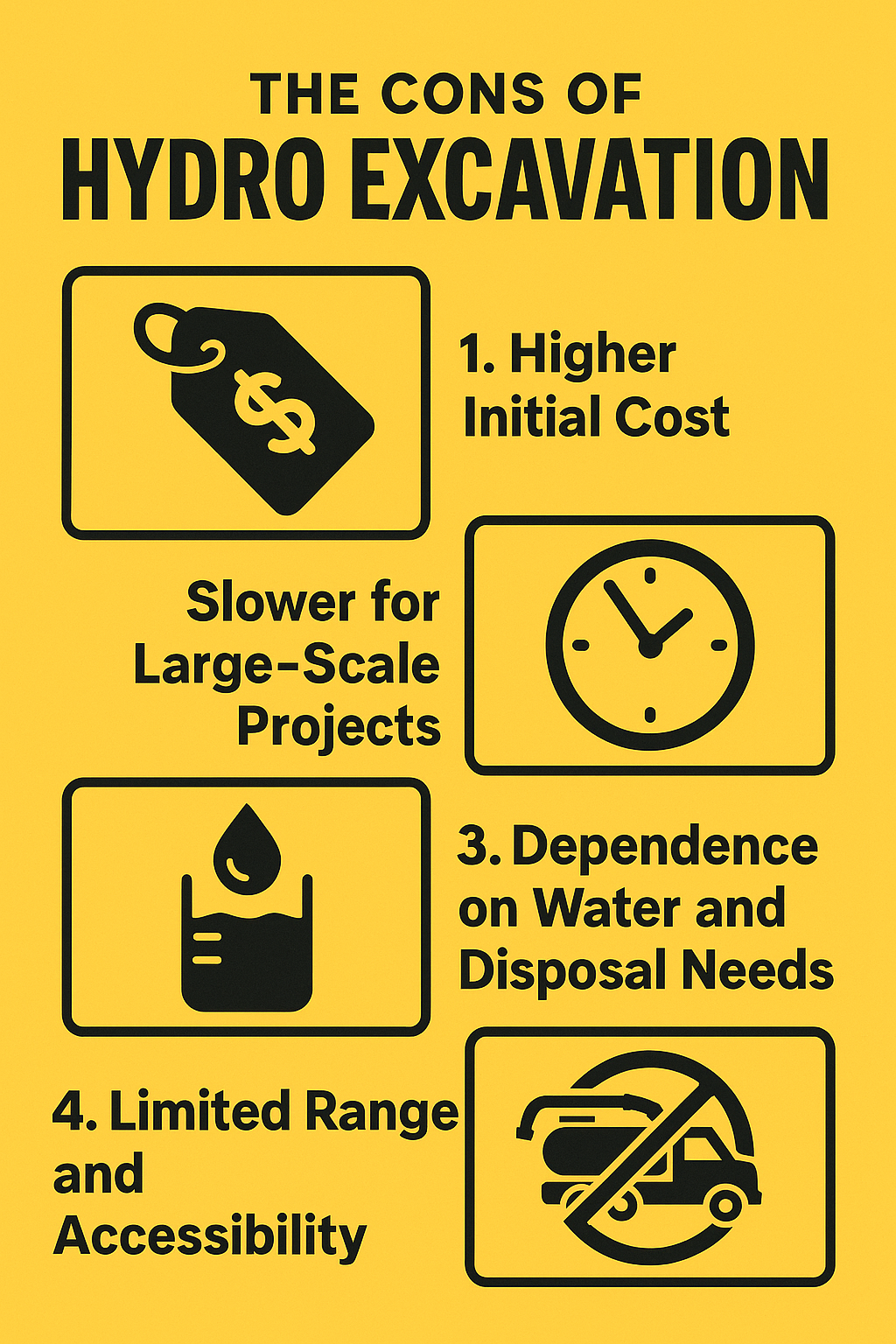
1. Higher Initial Cost
Hydro excavation typically costs more per hour than mechanical digging due to specialized equipment and skilled operators. However, these costs are often offset by reduced damage, less restoration work, and faster cleanup.
2. Slower for Large-Scale Projects
Traditional excavation remains more efficient for large earthmoving jobs or site preparation that involves moving thousands of cubic metres of material. Hydro excavation excels in precision work, not bulk removal.
3. Dependence on Water and Disposal Needs
This method relies on water availability and creates a slurry that must be disposed of properly at approved facilities. Managing this waste adds a step to the project, particularly in remote or environmentally restricted sites.
4. Limited Range and Accessibility
Although hydro excavation trucks have long hoses, their range is finite. On expansive or heavily wooded properties, additional equipment or partial mechanical excavation may still be needed.
Why Homeowners Are Making the Switch
Many property owners in Kingston and the surrounding areas are turning to hydro excavation because it provides peace of mind. As residential lots become more developed and underground infrastructure more complex, traditional excavation poses higher risks. Hydro excavation minimizes those risks by working precisely, safely, and with minimal environmental impact.
For projects such as septic installations, driveway expansions, and service line repairs, this method prevents damage that could cost far more to repair than the excavation itself. Homeowners also appreciate that it leaves their property cleaner and more presentable when the work is done.
Hydro Excavation and Ontario’s Safety Standards
Hydro excavation aligns perfectly with Ontario’s Occupational Health and Safety Act and Excavation and Trenching Regulations (O. Reg. 213/91), which require contractors to manage underground hazards and prevent soil collapse. Since the process relies on water and vacuum pressure rather than mechanical force, it provides greater control when working near buried utilities or unstable ground.
For projects in regulated or environmentally sensitive areas, hydro excavation also helps meet conservation and erosion-prevention standards. At M. Riddle Excavating, we coordinate closely with municipalities and conservation authorities to ensure every excavation method meets or exceeds local and provincial requirements.
Comparing Hydro Excavation to Traditional Digging
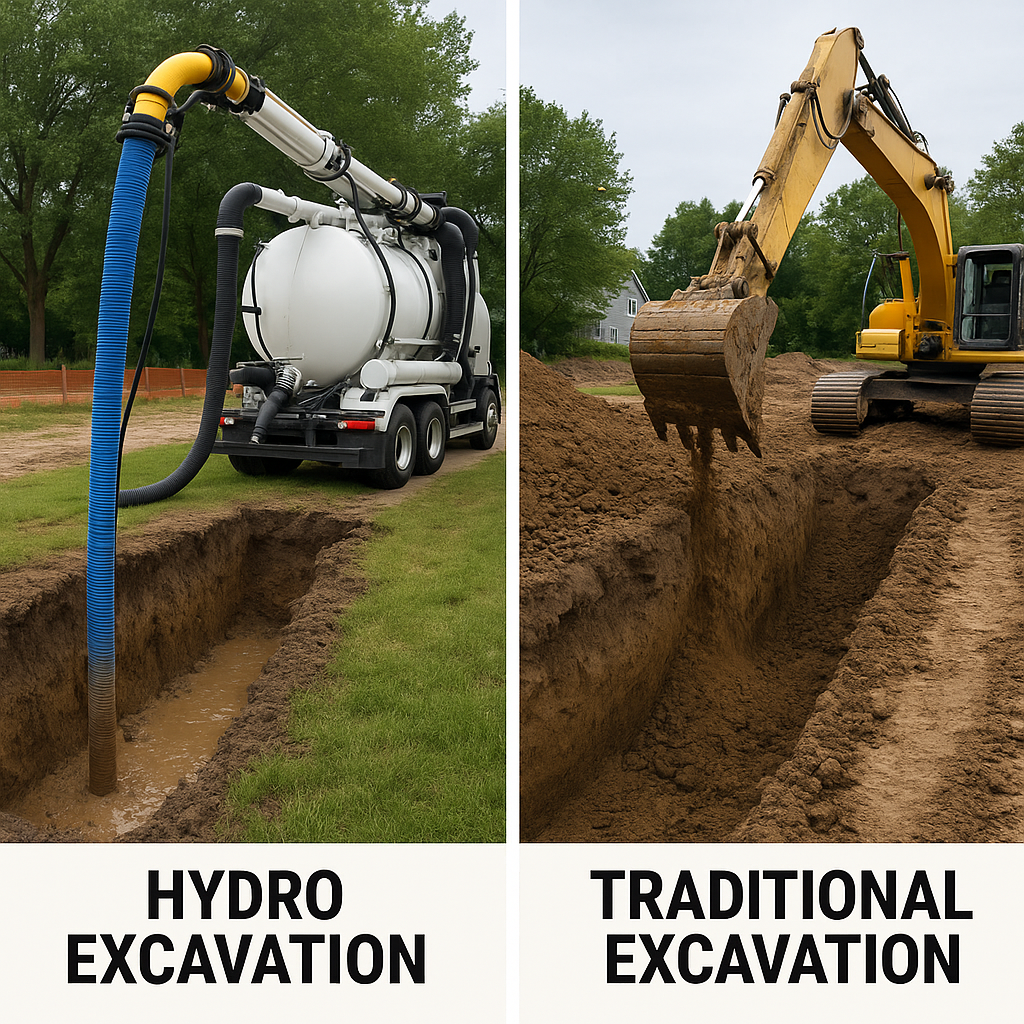
Traditional mechanical excavation remains essential for large-scale work such as road building, mass grading, or major construction. It’s fast and cost-effective for moving large amounts of soil. However, it lacks the precision and safety features that hydro excavation provides.
When accuracy and environmental protection matter most, hydro excavation becomes the clear choice. Traditional excavation often requires restoration of damaged lawns, driveways, or buried services, adding time and cost after the digging is complete. Hydro excavation minimizes these issues from the start.
In tight spaces or residential areas with underground utilities, the ability to dig cleanly and avoid damage is worth the investment. Hydro excavation may not replace all traditional methods, but it fills a growing niche where safety, precision, and minimal disruption are essential.
Final Thoughts
Hydro excavation is redefining how excavation is done in Ontario. Its accuracy, safety, and environmentally friendly operation make it ideal for modern projects where precision is more valuable than sheer speed. While the initial cost can be higher, most homeowners find that the benefits outweigh the expense – particularly when avoiding the risk of costly repairs or landscape restoration.
At M. Riddle Excavating, we combine advanced hydro excavation technology with decades of local experience. If you’re planning a project that demands safe and precise digging, contact our excavation specialists to discuss the best approach for your site. Our team ensures every dig is performed efficiently and with the utmost care for your property.
Hydro excavation isn’t just another digging method – it’s a smarter, safer, and cleaner way to protect your property and the environment.