
For many rural and cottage properties across Eastern Ontario, a septic system is an essential part of daily living. These systems manage wastewater safely and efficiently in areas where municipal sewer connections aren’t available.
Despite their importance, most homeowners rarely think about how their septic system operates until there’s a problem. Understanding septic system components – and how they work together – can help you prevent costly repairs, maintain performance, and extend the lifespan of your system.
At M. Riddle Excavating, we design,and install septic systems across Kingston, Napanee, Frontenac, and the Rideau Lakes region. Here’s a closer look at the main components of a typical system and how proper care keeps everything running smoothly.
The Basics: How a Septic System Works
A septic system treats and disposes of household wastewater on-site. It relies on a combination of natural processes and engineered design to separate solids, filter effluent, and safely return treated water to the ground.
Every system is made up of three primary septic system components: the septic tank, the distribution system, and the leaching bed (or drain field). When working correctly, these parts operate as a balanced unit to manage waste safely without odours, backups, or contamination.
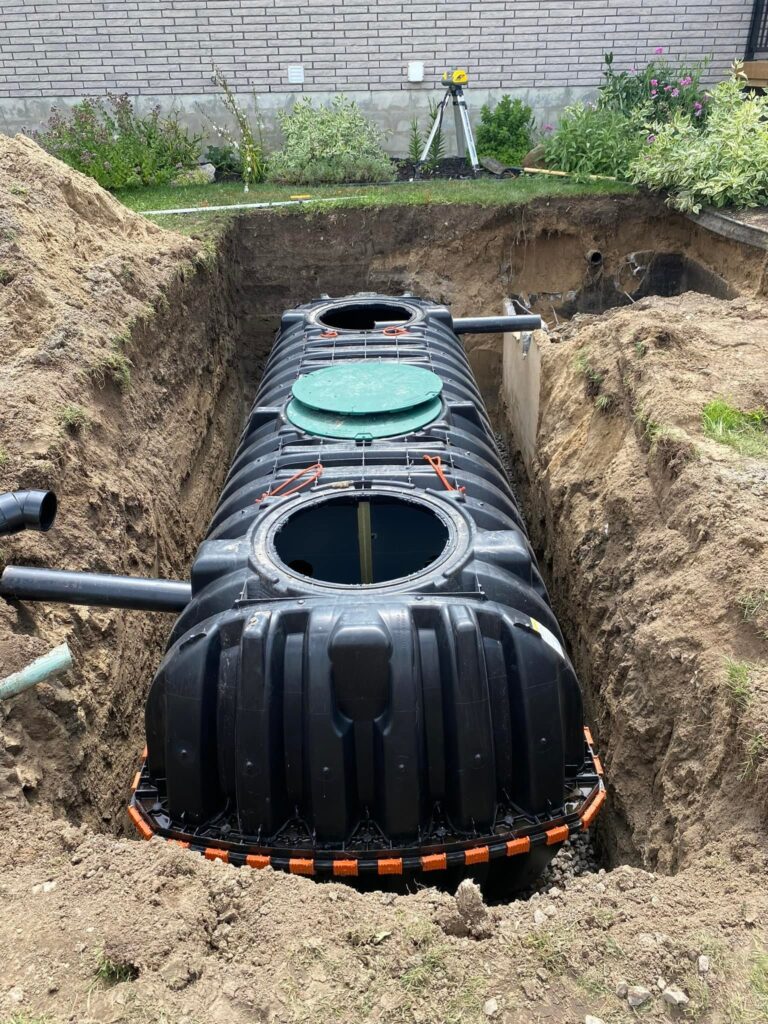
The Septic Tank – The First Stage of Treatment
The septic tank is the heart of the system. Usually made from concrete or polyethylene, it’s buried underground and designed to hold wastewater long enough for solids to settle to the bottom (forming sludge) and for lighter materials like grease and oils to float to the top (forming scum).
The tank contains two main compartments divided by baffles or walls. These structures slow down water flow, helping solids settle while preventing scum from escaping into the next stage. Effluent – the liquid wastewater – flows out of the tank through an outlet pipe and into the distribution system.
Regular pumping is essential to remove accumulated sludge and scum. Without it, solids can clog the system or enter the drain field, leading to failure. Most experts recommend septic tanks be pumped every three to five years, depending on household size and water use.
When we install tanks as part of a septic system design, we ensure proper sizing based on household flow rates, local soil conditions, and Ontario Building Code standards.
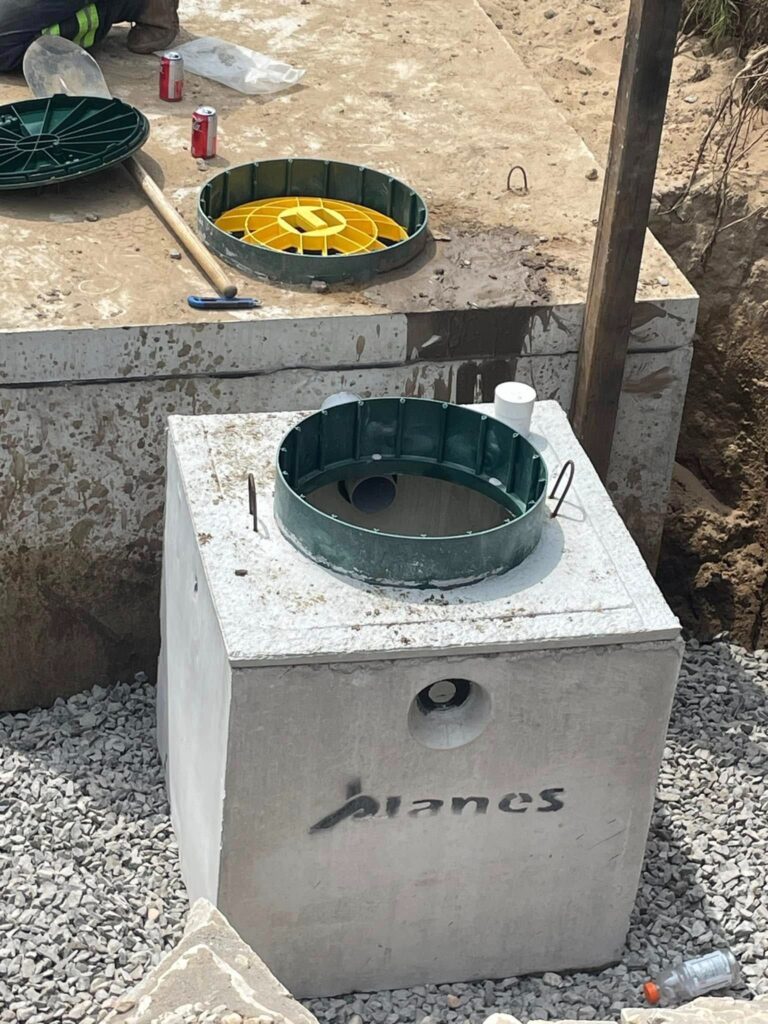
The Distribution System – Moving Effluent Safely
After leaving the septic tank, effluent flows into the distribution system, which evenly delivers liquid to the leaching bed or treatment area. Depending on site design, this component may use gravity or a pump.
Gravity-fed systems are most common on properties with suitable slopes, while pump-assisted systems are used where the leaching bed sits higher than the tank. The pump chamber includes sensors or floats that control water levels and prevent overloading the system.
Distribution pipes are perforated to allow effluent to seep out gradually and evenly. This step ensures consistent loading across the entire leaching bed and prevents premature saturation in one area.
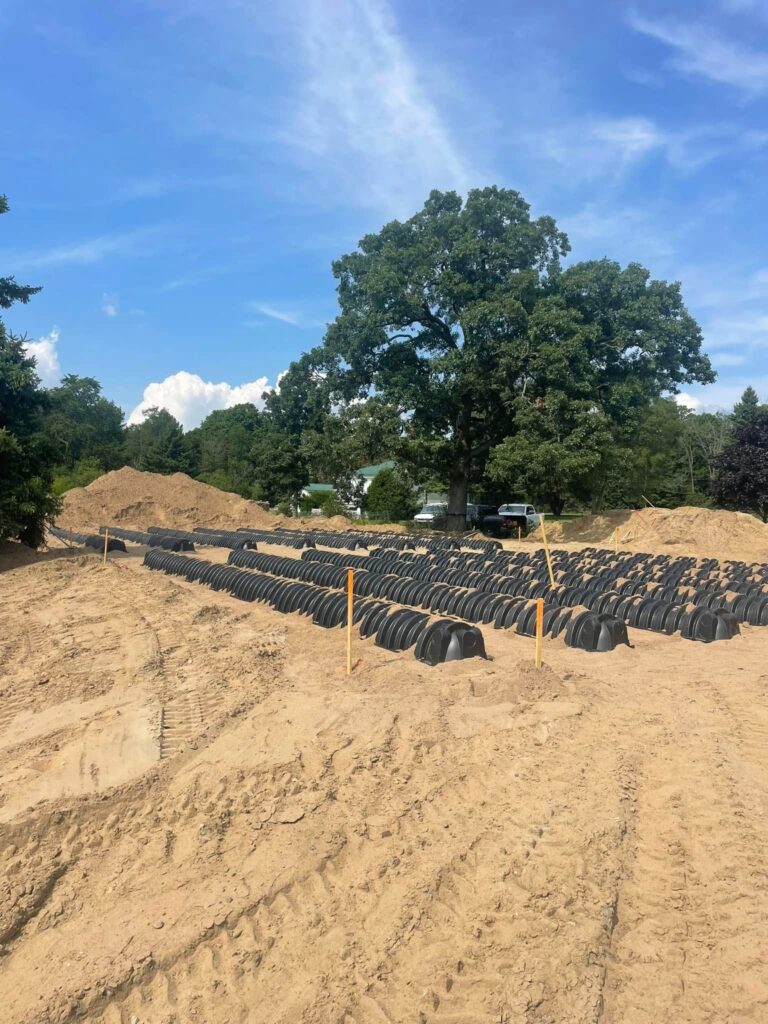
The Leaching Bed – The Final Treatment Area
The leaching bed, also called the drain field, is where natural filtration and treatment occur. It consists of a network of perforated pipes buried in layers of gravel and soil. As effluent seeps through, microorganisms in the soil break down remaining organic matter, while the gravel provides aeration and prevents clogging.
Soil type plays a major role in how well the leaching bed functions. Sandy soils drain quickly, while clay soils retain moisture and may require engineered designs such as raised beds or tertiary treatment systems. During excavation and site preparation, our team assesses these conditions carefully to ensure proper installation and long-term performance.
Signs of leaching bed problems include slow drains, soggy areas above the bed, or unpleasant odours. Regular maintenance and proper water use prevent clogging or hydraulic overload, which these symptoms often indicate.
Additional Septic System Components and Technologies
Modern septic systems can include extra components designed to improve treatment performance or adapt to challenging sites:
Effluent Filters – Installed at the outlet of the septic tank, these filters prevent solids from entering the distribution system.
Alarm Systems – Many modern systems include high-water alarms that alert homeowners when a pump or component fails.
Tertiary Treatment Units – Advanced systems such as the Eljen GSF system, which our team installs across Eastern Ontario, use filtration media and oxygenation to treat wastewater more effectively before it reaches the soil.
Distribution Boxes (D-Boxes) – These components divide flow evenly across multiple drain field lines, ensuring even distribution and preventing localized overloads.
Adding these modern features can increase system reliability and help meet local conservation or environmental standards.
Common Septic System Issues and Prevention
Like any infrastructure, septic systems can fail if not properly maintained. Common problems include:
Clogged Pipes: Caused by solids escaping the tank or by roots invading the lines.
Drain field saturation: happens when you use more water than the system can handle or when the leaching bed becomes compacted.
Improper Installation: Poor slope, undersized tanks, or insufficient soil depth can shorten system life.
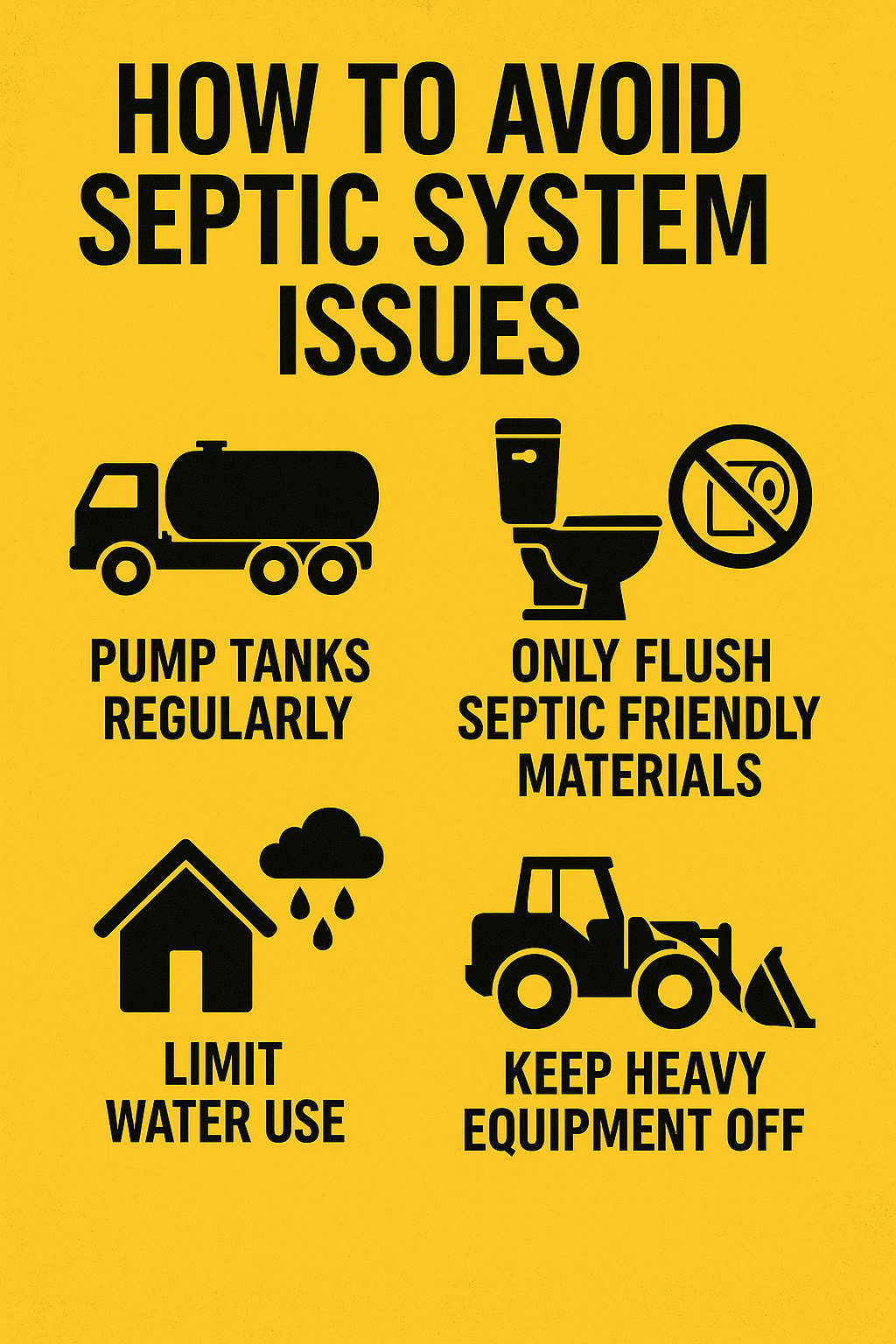
To avoid these issues, homeowners should:
- Pump tanks on a regular schedule.
- Avoid flushing grease, wipes, or chemicals that disrupt bacterial balance.
- Limit water use during heavy rainfall periods.
- Keep vehicles and heavy equipment off the leaching bed area.
Preventative care is far less costly than system replacement.
Maintenance Best Practices
Routine maintenance extends the life of your system and protects groundwater quality. Homeowners should maintain easy access to septic tank lids for inspection and pumping. Effluent filters should be cleaned annually, and alarms tested regularly.
Inspections by a qualified contractor can identify small issues before they escalate. The Ontario Onsite Wastewater Association also provides homeowner education and industry standards for proper septic system maintenance.
Keeping records of all maintenance and pumping helps track performance and ensures compliance with local health and building departments.
Septic Systems and Environmental Protection
A properly functioning septic system plays an important role in environmental stewardship. It treats wastewater naturally, returning clean water to the soil and replenishing groundwater sources. When systems fail, however, untreated wastewater can contaminate nearby wells, lakes, and wetlands.
In conservation-sensitive areas like Rideau Lakes and Frontenac, local authorities may require site-specific designs to prevent nutrient runoff. As a licensed installer, M. Riddle Excavating works closely with conservation authorities to ensure every system we install protects both property and the surrounding ecosystem.
Final Thoughts
Understanding septic system components helps homeowners make informed decisions about installation, maintenance, and upgrades. Each part – from the tank to the leaching bed – plays a crucial role in treating wastewater safely and effectively.
We design and install septic systems tailored to the unique soil, groundwater, and environmental conditions found across Eastern Ontario. Our team handles every stage of the process, from permitting and excavation to final grading, ensuring long-term reliability and peace of mind.
Contact our team to have a well-designed and properly maintained septic system – so it doesn’t just protect your property – it protects the land and water that make your rural living possible.
Get a Free Septic Quote
Get a free quote today. Call M. Riddle Excavating at 613-545-7955 or request a free quote online. We serve Kingston and Frontenac County.