
Most homeowners barely notice the ditches and culverts running alongside their driveways – until the day something goes wrong. A heavy storm passes through, runoff overwhelms the drainage route, and suddenly water spills across the driveway instead of flowing safely beneath it. Or a driveway begins to erode along one edge, revealing that a culvert has shifted, collapsed, or become clogged with seasonal debris. At that moment, the importance of these small but essential drainage structures becomes unmistakable.
Even though they operate quietly and remain out of sight, ditches and culverts are critical components of stormwater management for rural and suburban properties. Their job is simple: collect, direct, and move water safely away from high-traffic areas and toward appropriate outflow points. When they perform well, they protect driveways, foundations, landscaping, and nearby structures from unnecessary water damage. When they fail, the effects can escalate quickly – leading to driveway washouts, soil erosion, and costly repairs that could have been prevented with routine maintenance.
Understanding how ditches and culverts work, why they deteriorate, and how to maintain them is essential for keeping your property protected year-round. These hidden heroes deserve far more attention than they typically receive.
Why Ditches and Culverts Are Essential to Driveway Health
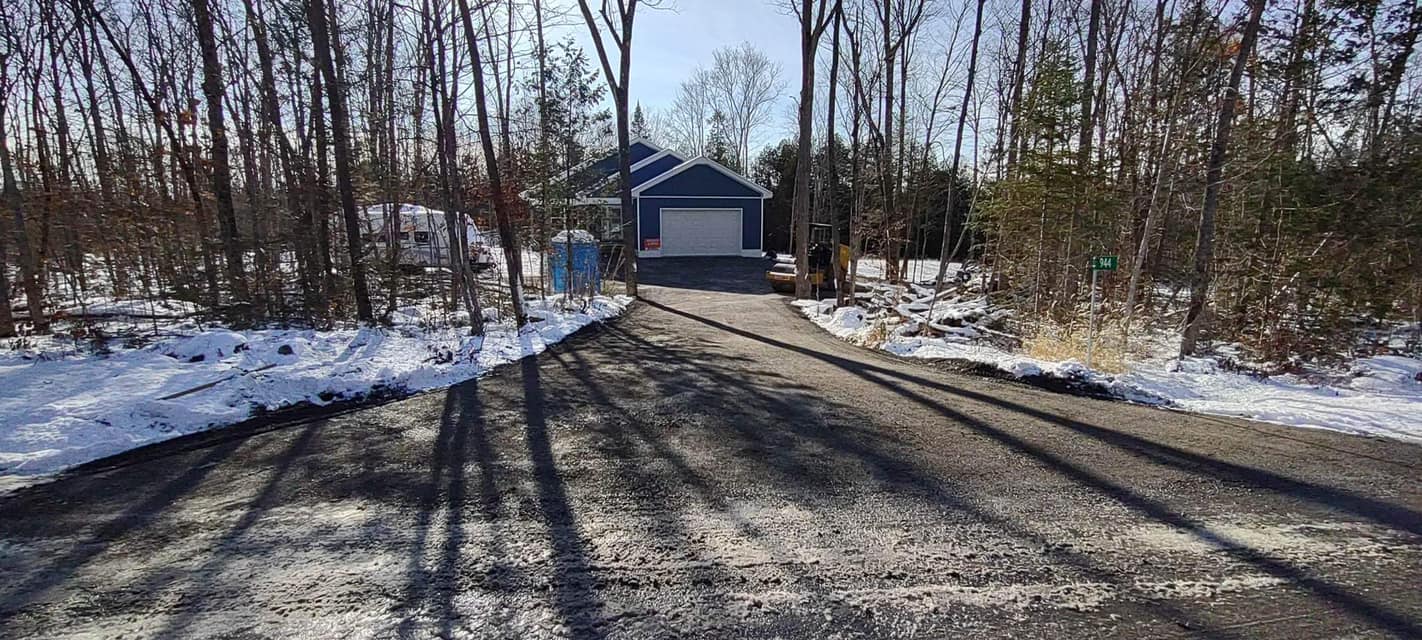
In rural residential areas, private lanes, gravel driveways, and long access roads depend heavily on functioning ditches and culverts. Stormwater will always search for the lowest point of travel, and without a controlled path, it often flows along – or across – the driveway surface. Over time, this uncontrolled runoff washes away gravel, undermines asphalt, saturates soils, and increases the risk of flooding around structures.
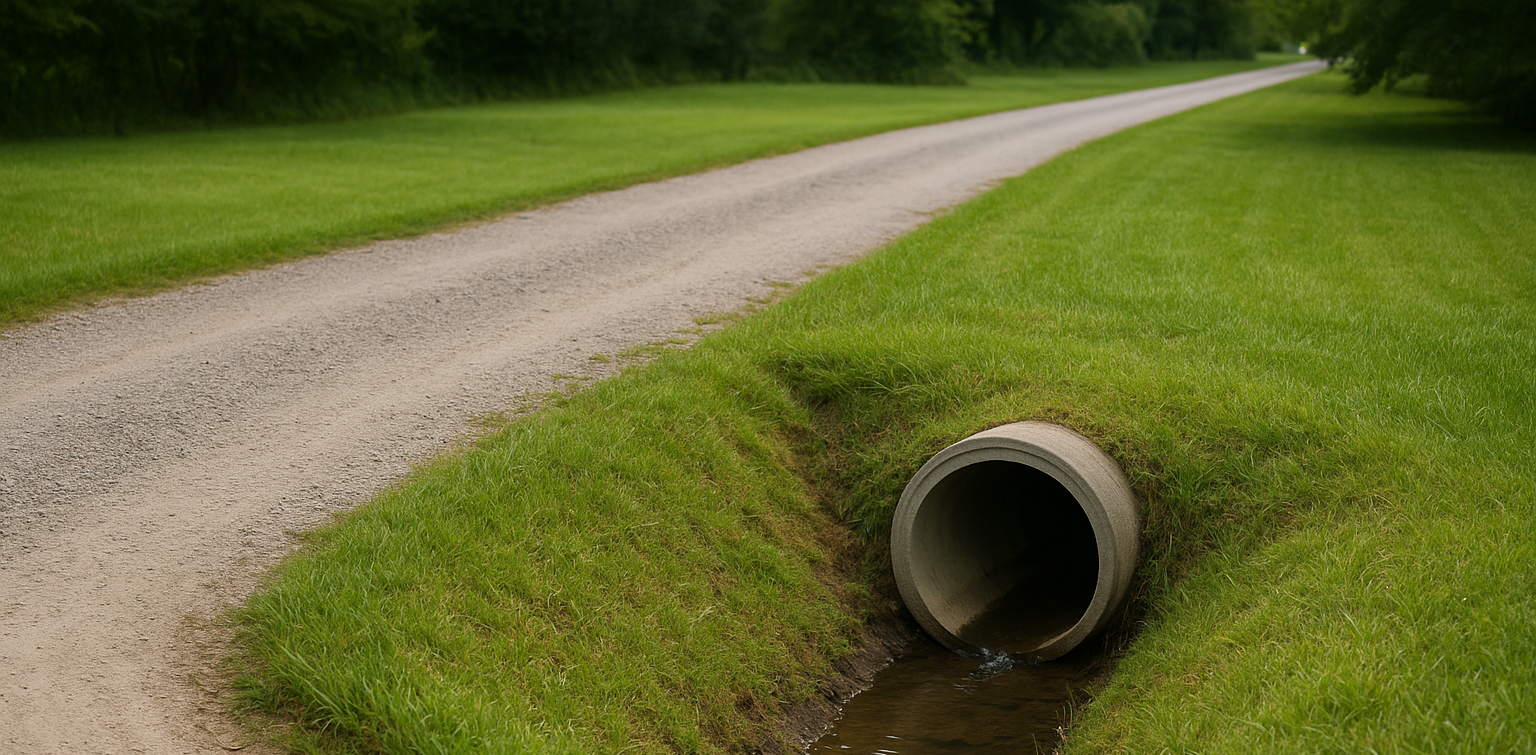
Ditches act as the first line of defense by capturing runoff from surrounding slopes and roadway surfaces. A properly graded ditch moves water efficiently toward a discharge point without allowing it to pool or stagnate. Culverts then carry that water beneath the driveway, maintaining both access and structural integrity. When those two systems work together, water moves predictably and safely.
If either part becomes compromised, however, the system loses balance. A ditch with insufficient depth or slope slows water, allowing sediment to collect and reducing capacity. A blocked or damaged culvert forces water to overflow during storms. In both scenarios, homeowners often don’t notice the issue until water begins to behave in ways it never has before – spilling onto the driveway, pooling in low spots, or carving channels along the edges.
How Ditches and Culverts Work Together as One System
Although they look like separate components, ditches and culverts operate as a single, continuous drainage network. A ditch channels the water, and a culvert allows that water to cross beneath a driveway without disturbing the surface. If the ditch carries too little water or too much sediment, the culvert can’t draw water through at the intended rate. If the culvert becomes obstructed or collapses, even a perfectly shaped ditch becomes ineffective.
This interdependence is why drainage professionals evaluate the entire flow path when diagnosing issues. The most common failures occur slowly over time – not from one catastrophic event, but from many seasons of sediment buildup, plant growth, freeze-thaw cycles, and general wear. Homeowners who understand this relationship between ditches and culverts are better equipped to identify early warning signs and prevent larger problems from developing.
The Most Common Threats to Ditches and Culverts
Stormwater drainage systems face natural challenges throughout the year. Sediment gradually settles in ditch bottoms. Vegetation grows thicker each season, especially during warm, rainy months. Culvert entrances accumulate leaves, sticks, or windblown debris. Winter transforms flowing water into ice, placing pressure on culverts and diverting meltwater elsewhere. Even older culvert materials such as steel can deteriorate from rust, and plastic culverts may deform under repeated heavy traffic.
In many cases, homeowners do not detect these issues immediately. Water might still flow – just more slowly or unpredictably. Every small shift reduces the system’s capacity to handle major storms or spring melt. Over time, this reduced efficiency increases the likelihood of driveway washouts, erosion, repeated flooding, and the need for increased gravel road maintenance.
Season-by-Season Guidance for Keeping Ditches and Culverts Functioning
Different seasons present different risks, and year-round attention ensures ditches and culverts remain capable of handling water whenever nature delivers it.
Spring often reveals the damage winter has left behind. Freeze-thaw cycles can shift culverts slightly out of place or create ice buildup that remains long after temperatures rise. Snowmelt carries sediment and branches directly into drainage channels. A spring inspection helps identify partial blockages before the first major rainfall of the season.
Summer brings growth – sometimes too much of it. Vegetation can take over ditch lines quickly, slowing water and creating barriers that trap debris. Heavy thunderstorms also wash loose gravel or soil into drainage routes. Summer is the ideal time to correct grading issues, clear vegetation, and ensure culverts are drawing water properly.
Fall presents the biggest challenge in the form of leaves. Properties with mature trees or wooded surroundings see culvert entrances clog rapidly, often in a single storm. Clearing ditches and culverts before the first snowfall ensures winter meltwater has a clear path.This is also a case where occasional land clearing may be necessary.
Winter itself limits what maintenance can be done, but it offers clues. Water flowing across the driveway on warmer winter days often signals a plugged culvert or shallow ditch. Observing these patterns helps guide spring repair decisions.
If you’re unsure whether your drainage system needs minor maintenance or a more comprehensive upgrade, exploring real-world drainage solutions can help you understand what professionally restored systems look like.
How to Recognize When Ditches and Culverts Are Beginning to Fail
- Water standing or moving slowly inside ditches
- Overflow running across the driveway surface
- Erosion forming along driveway edges or slopes
- Soft, sunken ground above the culvert pipe
- Dense plant growth inside the ditch bottom
- Visible culvert damage such as rust, cracks, or deformation
- Water pooling near the culvert inlet after storms
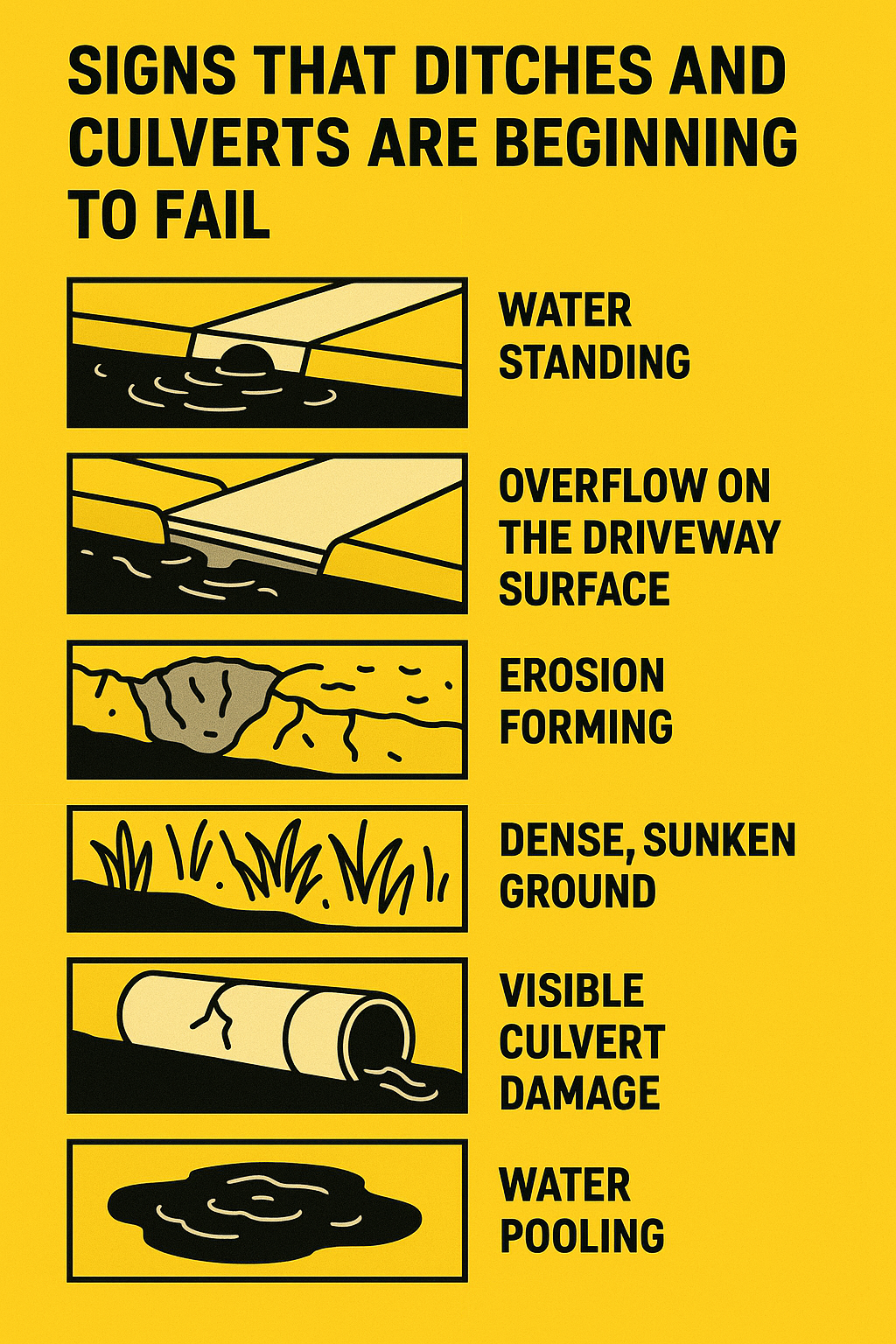
These conditions indicate that ditches and culverts are no longer operating efficiently. Addressing the root causes early prevents long-term structural issues.
Why Correct Grading Is Critical for Drainage
While clearing debris is important, maintaining proper grading is equally essential. A ditch should have a slope that allows water to move at a controlled rate – fast enough to prevent stagnation but slow enough to avoid erosion. Even a small change in grade due to settling, erosion, or previous repairs can reduce capacity.
Culverts also depend on precise installation. If installed too shallow, they may freeze easily or collect debris at the inlet. If installed too deep, they can fill with sediment or lose alignment with the ditch flow. Over time, soil compaction, driveway traffic, and seasonal movement may alter their angle, changing how water enters and exits the pipe.
Grading issues are difficult to diagnose without experience meaning that a professional evaluation is often necessary to restore proper ditch and culvert alignment.
The Value of Professional Maintenance and Installation
Although homeowners can manage basic monitoring, professional drainage contractors have the tools and expertise required to restore and maintain ditches and culverts correctly. Excavation professionals can reshape ditch profiles, remove deep sediment deposits, reinforce erosion-prone areas, and replace older culverts with properly sized modern materials.
Professionals also evaluate how water moves across the entire property instead of focusing on a single problem area. This ensures the drainage system functions holistically and prevents future issues caused by incorrect sizing, poor grading, or improper installation.
Routine professional maintenance extends the lifespan of a driveway, reduces the risk of flooding, and ensures that ditches and culverts can handle increasing storm intensity – a growing concern in many regions.
Why Ditches and Culverts Are the Unsung Guardians of Your Property
When properly maintained, ditches and culverts quietly protect driveways, landscaping, and structures from stormwater damage. They preserve driveway performance, support road safety, and ensure water moves along predictable routes instead of carving new paths across your land. Their importance only becomes visible when they stop functioning – and by then, damage has already begun.
Investing time into maintaining these structures pays dividends in the form of reduced repairs, greater property resilience, and peace of mind during every major storm.
Ready to Improve Your Property’s Drainage System?
If your driveway shows signs of erosion, pooling water, or reduced drainage performance, it’s time to have your ditches and culverts evaluated by a professional. A proper assessment ensures water flows safely year-round and prevents small issues from becoming costly repairs.