
Spring driveway drainage becomes one of the most pressing concerns for Ontario property owners. The months of frost, snowmelt, and saturated soil leave behind visible and hidden damage that affects how water moves across and beneath your property. Driveways shift, culverts clog, and grading that once directed water away from structures may no longer perform correctly.
Understanding what to look for during a post-thaw inspection helps homeowners catch problems before spring rains arrive in full force. Once the ground softens and snowmelt accelerates, a drainage system that is partially blocked or improperly graded quickly becomes a larger and costlier issue. Taking time to assess your driveway drainage, culverts, and grading allows you to address problems while the ground is accessible.
Why Spring Is the Most Critical Time for Driveway Drainage in Ontario
Ontario winters subject rural and suburban properties to repeated freeze-thaw cycles, heavy snowpack, and ground frost. When that frost releases in spring, the soil remains saturated for an extended period, losing its capacity to absorb water quickly. During this window, spring driveway drainage systems face their heaviest load of the year.
Water from snowmelt does not simply soak into the ground the way summer rain does. It runs across frozen or partially thawed soil and concentrates wherever a low point, obstruction, or compromised drainage channel exists. Ontario’s environmental guidelines for access roads and drainage emphasize the importance of regular culvert inspection and maintenance of ditches to prevent blockage, erosion, and road damage during periods of high runoff. These same principles apply directly to private driveways and rural property access routes across the province.
When spring driveway drainage fails, the consequences range from surface erosion and soft spots to structural undermining. Gravel driveways are particularly vulnerable, as frost heave dislodges stone and snowmelt washes material into ditches. Paved surfaces crack and settle when water infiltrates the base layer and then expands during a late freeze event.
Inspecting Your Driveway Surface After the Thaw
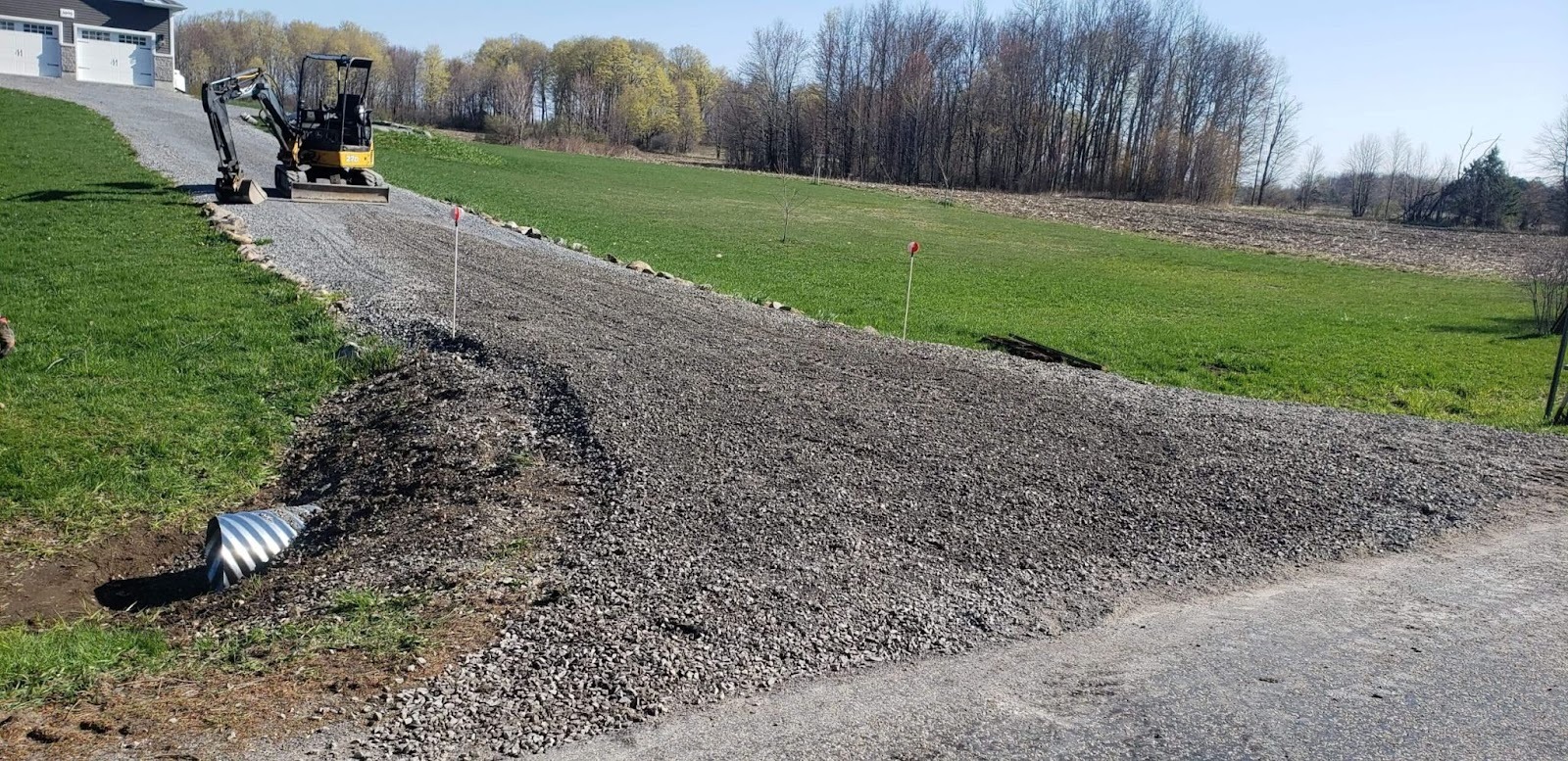
The first step in any post-thaw assessment is a thorough visual and physical inspection of the driveway surface. Walk the full length of the driveway and pay attention to areas where the surface feels soft underfoot, where ruts have formed, or where the crown has flattened to the point where water pools rather than sheds toward the edges.
Frost heave frequently causes gravel to migrate toward the shoulders or into adjacent ditches over winter. When this happens, the centre of the driveway loses its slight crown. This is the gentle rise that encourages water to flow away from the driving surface. A flattened or inverted crown directs water toward the middle of the driveway, where it saturates the base material and accelerates deterioration.
Low spots, soft patches, and areas with standing water all indicate locations where the base material has shifted. These areas benefit from gravel topping and proper compaction once the ground firms up. However the underlying drainage issue must also be addressed. Excavation and site preparation professionals assess these conditions carefully before recommending whether a surface repair is sufficient or whether the base layer or subgrade requires attention.
Checking Culverts for Blockage and Structural Integrity
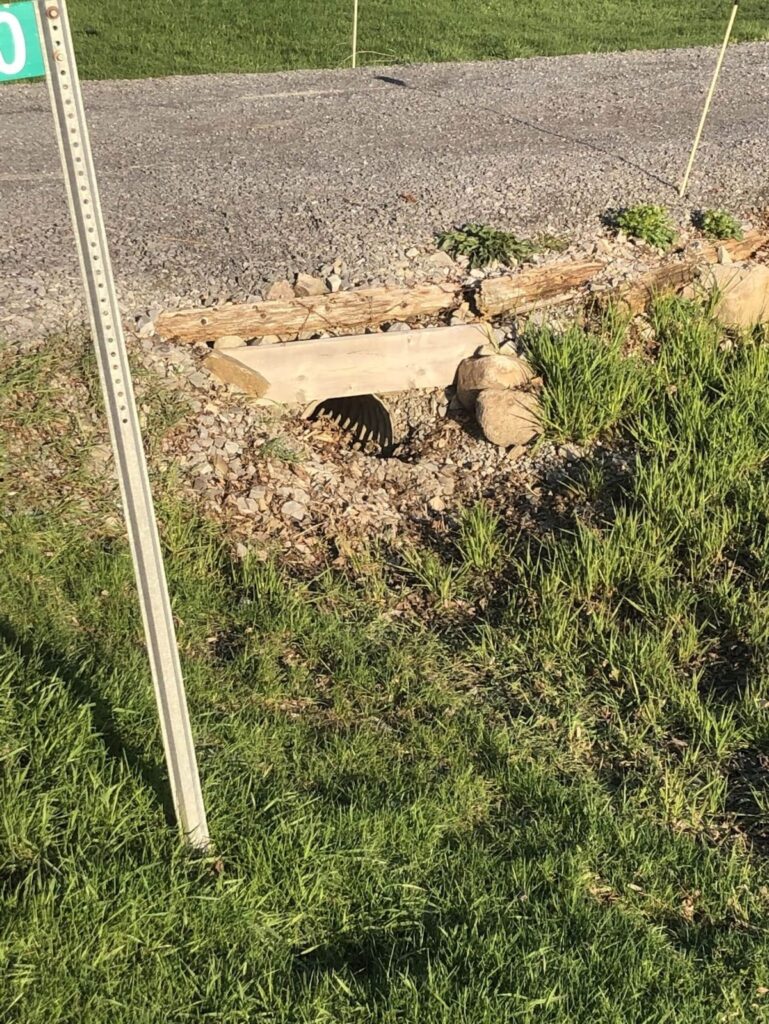
Driveway culverts are among the most overlooked components of a rural or semi-rural property. Yet they play a critical role in managing spring driveway drainage. A culvert that has become blocked with silt, debris, or ice during winter cannot pass water effectively, causing it to back up against the driveway base or overflow across the driving surface.
In Ontario, driveway culverts are the responsibility of the property owner.Homeowners should inspect culverts at least once a year. This includes during wet weather conditions, to confirm they remain free of obstructions and structurally sound. Spring is the most important inspection window because winter debris, displaced soil, and compacted material from snowplowing often collects at culvert inlets and outlets between October and March.
When inspecting a culvert, begin at the inlet. Look for any accumulation of leaves, gravel, or sediment that narrows the opening. Then check the outlet end for similar blockages and look for signs that water has been backing up rather than flowing through. Signs of washout around the outlet or erosion channels on the slope indicate that overflow has been occurring.
Culverts that show signs of collapse, significant corrosion, or joint separation require professional evaluation. A culvert that has shifted out of alignment with the ditch will not drain properly. Proper slope and alignment are essential for effective spring driveway drainage through culverts. Restoring these conditions often requires excavation to reset the pipe.
Assessing Roadside Ditches and Surface Drainage Channels
Roadside ditches that run alongside a driveway serve as the primary collection channel for surface runoff. After winter, these ditches frequently fill with sediment, matted vegetation, and material displaced by plowing. A partially filled ditch cannot carry the volume of water that spring snowmelt generates, causing overflow that backs up against the driveway or spreads across the property.
Walk the full length of any ditch adjacent to your driveway and assess whether the grade and slope remain intact. The ditch should have a consistent fall that carries water away from the property without low points where pooling occurs. Where the ditch has filled in or the slope has been disrupted, cleaning and regrading restores function and protects the driveway from water damage.
Surface drainage patterns across the wider property also affect spring driveway drainage performance. Water that flows toward the driveway from surrounding ground adds volume to an already stressed system during thaw. Grading that directs runoff away from the driveway and toward appropriate outlets is essential for long-term performance. A site assessment by an experienced excavation contractor can identify grading issues that contribute to seasonal drainage problems. They can also recommend corrections that address the root cause rather than just the surface symptoms.
Understanding Frost Heave and Base Layer Damage
One of the less visible consequences of Ontario winters is the effect of frost heave on the structural base beneath a driveway. When water in the subgrade freezes, it expands and lifts the material above it. As temperatures cycle repeatedly, this movement gradually displaces base material and creates voids or soft zones that compromise load-bearing capacity.
By the time spring driveway drainage issues become visible at the surface, the base layer beneath may have experienced displacement. Soft spots that feel spongy underfoot are a clear indicator of base saturation and possible frost damage. In severe cases, the surface may crack, heave, or develop ruts that worsen with every vehicle pass during the thaw period.
Allowing the ground adequate time to dry before undertaking heavy repair work is important. Driving heavy equipment over a waterlogged base layer compounds the damage and can permanently alter drainage characteristics.. Once conditions have stabilized, restoring proper compaction and grade prepares the driveway for reliable performance.
When to Call a Professional for Spring Driveway Drainage Repairs
Some spring driveway drainage issues fall within the range of straightforward homeowner maintenance, such as clearing debris from culvert inlets or spreading additional gravel on a lightly eroded surface. Other conditions require professional assessment and equipment to address correctly and permanently.
When a culvert requires replacement or repositioning, when the driveway base needs full excavation and reconstruction, or when drainage grading across the property requires correction, professional involvement ensures the work is done to a standard that provides lasting results. Completed excavation and drainage projects throughout Eastern Ontario demonstrate how proper base preparation, correct culvert sizing, and accurate grading combine to produce spring driveway drainage systems that perform reliably through years of freeze-thaw cycles.
Early spring is also the time to plan ahead for any work that needs to wait until the ground fully firms. Scheduling assessments in March or April ensures that excavation and grading work can begin as soon as conditions allow, rather than competing with the peak demand period in mid-spring when contractors are fully committed.
Protecting Your Property Through Proactive Spring Drainage Maintenance
Spring driveway drainage performance reflects the cumulative effect of every winter that has passed since the driveway was installed or last improved. Properties where drainage infrastructure has been well maintained and where culverts, ditches, and grading have been kept in good condition tend to recover from winter with minimal intervention. Properties where drainage has been deferred face compounding problems as each spring adds to accumulated damage.
Taking a systematic approach to post-thaw inspection builds the kind of institutional knowledge that helps homeowners make informed decisions about when to repair, when to improve, and when to call for professional support. Completed excavation and drainage projects early in the season ensures that advice and scheduling are available before the busiest period of the spring construction season begins.
Spring driveway drainage that functions correctly protects more than just the driveway surface. It protects the foundation area of structures, prevents erosion that degrades adjacent land, and maintains safe and accessible entry to rural properties throughout the most demanding drainage period of the Ontario calendar year. Consistent attention to culverts, ditches, surface grading, and base condition keeps that infrastructure performing season after season.