
Many Ontario homeowners notice puddles collecting near the foundation, or water seeping into the basement after heavy rain. These signs often point to one underlying issue: poor drainage caused by improper slope. When the land around a home directs water toward the structure, the solution is to regrade your property. Addressing this issue early prevents costly structural damage and long-term soil instability that becomes far more difficult to correct over time.
Understanding when and why to regrade your property helps homeowners make informed decisions about protecting their land, foundation, and investment. Ontario’s climate, with its seasonal rainfall, and clay-heavy soils, makes proper grading especially critical for residential and rural properties.
What It Means to Regrade Your Property
To regrade your property means to reshape the ground surface so water flows away from structures and toward drainage channels. The standard recommendation for residential properties is a slope of at least six inches over the first ten feet adjacent to any foundation. When that slope flattens out or reverses direction over time due to soil settlement, erosion, or construction, surface water begins to accumulate in areas where it causes harm.
Grading is not simply about aesthetics or convenience. It is a functional component of how a property manages precipitation and snowmelt. According to the City of Kingston stormwater management guidelines, directing surface water away from buildings and toward designated drainage areas is a key responsibility for property owners. Failing to maintain adequate slope can result in water intrusion, foundation damage, and contributions to broader stormwater management issues in the community.
Warning Signs That It May Be Time to Regrade Your Property
Recognizing the signs that you need to regrade your property requires observing your land during and after seasonal thawing. One of the most common indicators is standing water that takes more than 24 hours to drain from yard areas. When soil cannot shed water efficiently, it becomes oversaturated and begins pushing moisture toward the foundation through hydrostatic pressure.
Water staining on foundation walls, efflorescence on basement concrete, or a consistently damp lower level during wet seasons all suggest that drainage around the structure has deteriorated. Heaving or cracking in patios, walkways, and driveways can also indicate that freeze and thaw cycles are being amplified by poor moisture control in the soil beneath.
Soil erosion patterns, such as channels forming in lawn areas, topsoil washing away from garden beds, or bare patches appearing after rain, are another indicator that surface water is moving in uncontrolled directions. These patterns suggest that the existing grade is directing flow across the yard rather than safely off the property.
In Ontario’s rural settings, properties with aged grading that predates current standards often show these problems more acutely. If a home was constructed decades ago, soils and drainage patterns may be directing water toward vulnerable areas. Contacting an experienced excavation team to assess drainage performance gives homeowners a clear picture of what needs to be addressed.
Why Ontario Soil and Climate Conditions Make Regrading More Urgent
Ontario’s soil composition varies significantly across the province. However, many residential areas sit on clay-heavy or mixed soils that drain slowly and swell when saturated. These soils do not absorb excess water quickly, which means surface drainage depends almost entirely on slope and grading.
When you regrade your property in Ontario, the work must account for seasonal behaviour. Clay soils expand when wet and contract when dry. This means grading must remain stable through multiple freeze and thaw cycles over the years. Backfill that is not properly compacted can settle unevenly, undoing grading work within a season or two.
Ontario’s spring thaw is a particularly demanding period for drainage infrastructure. Snowmelt combined with spring rain can introduce large volumes of water to the soil in a short period. If grading directs that water toward a foundation or low point in the yard, the consequences compound quickly.
The Process of Regrading a Property
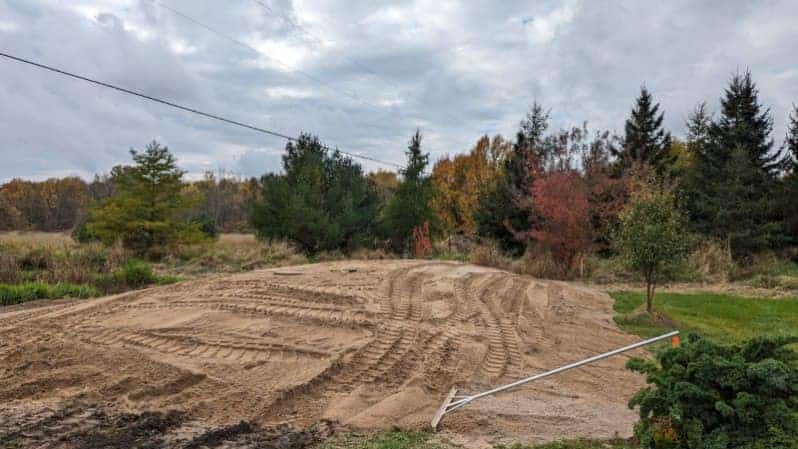
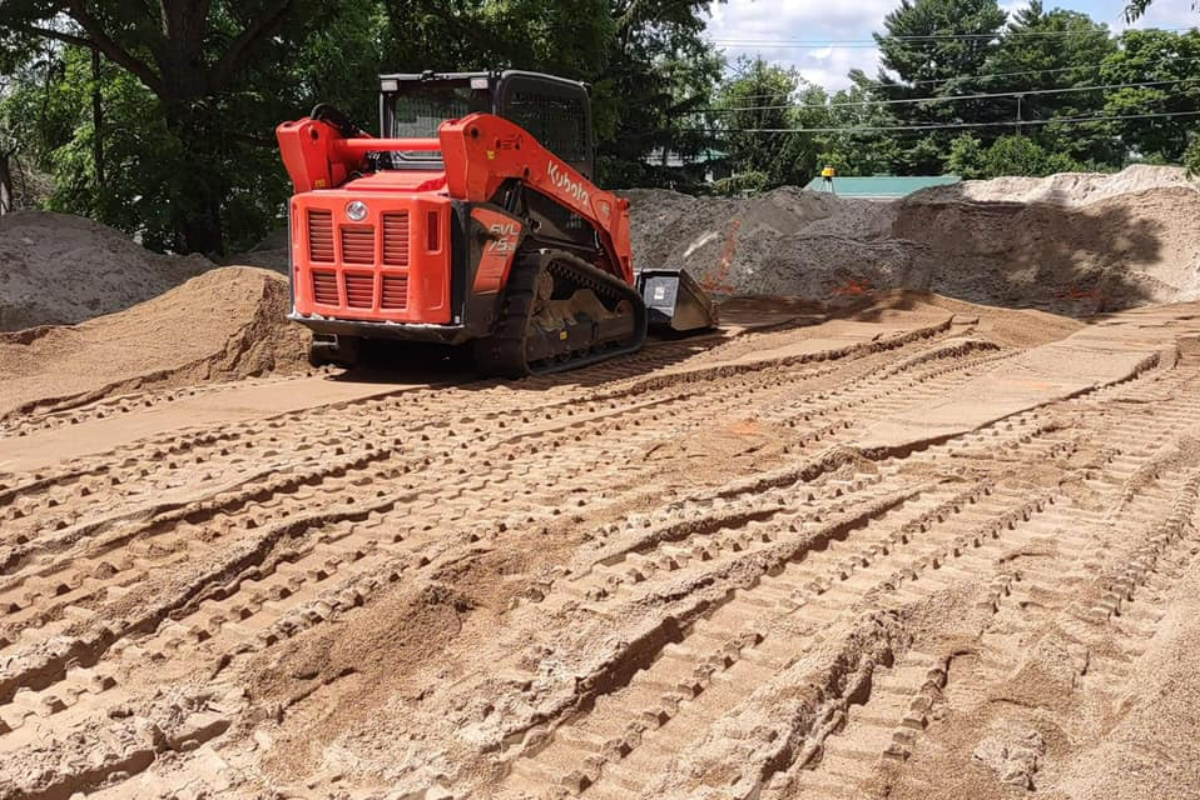
When professionals regrade your property, the work typically involves evaluating existing grades, removing or redistributing topsoil and subsoil, compacting fill layers appropriately, and shaping the surface to achieve a consistent slope away from the structure. The scope of work depends on the severity of the grading issue and the size of the area involved.
Larger projects may require importing clean fill material to raise low areas or correct significant depressions. In some situations, grading work connects to broader drainage improvements. These can include swales, catch basins, or French drain installations.
Proper compaction at each layer is critical. Fill that is not compacted to the appropriate density will settle and shift, recreating drainage problems within a few seasons. Experienced excavation contractors use equipment and techniques that ensure backfill stability over time, which protects the investment made in grading improvements.
Once regrading is complete, topsoil is restored, seeding or sodding may be applied. Review of completed site preparation and grading projects gives homeowners a practical understanding of what this type of work looks like across different property types and conditions in Ontario.
Protecting Your Foundation Through Proper Grading
The foundation is the most significant reason homeowners choose to regrade their property. When water consistently collects against foundation walls, it increases hydrostatic pressure. This can introduce moisture into porous concrete, and contributes to long-term cracking, shifting, and deterioration. These foundation repairs are significantly more costly than addressing the drainage issue that caused them.
Improper grading is one of the most common contributors to residential water damage in Canada. Maintaining a slope for drainage is a preventive measure for protecting structural integrity and air quality.
Once grading is corrected, homeowners often notice immediate improvements in how quickly water clears from yard areas after rain. Foundation walls stay drier, basement humidity levels stabilize, and the lawn recovers more evenly from wet periods. These outcomes reflect the broader value of choosing to regrade your property before water damage has a chance to develop into a larger structural concern.
When to Regrade Your Property Before Issues Become Costly
Timing matters when deciding to regrade your property. Early intervention, before water damage has penetrated foundation walls or eroded significant amounts of topsoil, makes the work more straightforward and less expensive. Homeowners who notice drainage concerns should act before the problem worsens through additional seasonal cycles.
Spring is often the best season to commission grading work in Ontario. Soils are workable, the impact of winter to spring drainage patterns is visible, and completing regrading before summer allows lawns and planted areas to re-establish through the growing season. Autumn is also viable for many projects, provided work is completed before the ground freezes.
If you are planning a new addition, deck, driveway expansion, or landscape overhaul, incorporating regrading into that project avoids double mobilisation of equipment and reduces overall cost. Thinking about grading proactively as part of broader property improvements is a practical approach that many homeowners benefit from when working with a knowledgeable excavation team.
Taking Action to Regrade Your Property
When drainage issues are visible, waiting rarely improves the situation. Water that is moving in the wrong direction will continue to saturate soil, stress foundations, and erode landscapes with each rain event and snowmelt. The decision to regrade your property is ultimately a decision to protect the long-term stability and value of the land and structure.
A professional evaluation of slope, soil conditions, and drainage patterns provides the foundation for effective regrading work. Ontario homeowners who suspect grading problems or who have noticed recurring wet areas, foundation dampness, or erosion patterns should contact a qualified excavation professional to discuss options and next steps.
Properly planned and executed regrading addresses the source of drainage problems rather than treating symptoms. For properties across Ontario, where soil conditions and seasonal extremes place constant demands on drainage infrastructure, taking the time to regrade your property correctly delivers lasting results that protect both the home and the land it sits on.