Knowing what not to put down your drain is one of the most important responsibilities for any Ontario homeowner. Unlike municipal sewer networks, which route wastewater through large treatment facilities, septic systems process everything on site. What enters your drains directly affects the health of your tank, and the performance of your leaching bed. Many everyday household products that seem harmless can disrupt the biological processes that make a septic system function correctly.
Understanding what not to put down your drain protects more than just plumbing. It safeguards the soil, groundwater, and the investment homeowners make when installing or maintaining a septic system. Ontario’s varied soil conditions and seasonal climate make this awareness even more critical, as systems already face stress from frost penetration, spring saturation, and drainage challenges throughout the year.
How Septic Systems Process Household Waste
A septic system relies on natural bacterial activity to break down organic matter. Wastewater flows from the home into the tank, where solids settle and bacteria begin decomposition. The liquid portion, known as effluent, moves into the leaching bed, where soil filtration removes remaining contaminants before the water re-enters the groundwater table.
This process works effectively when only appropriate materials enter the system. Introducing the wrong substances reduces bacterial populations, clogs distribution pipes, or forces solids into the leaching bed prematurely. Ontario’s onsite wastewater management guidance emphasises that homeowner behaviour significantly influences system longevity and performance. Responsible drain habits are not optional maintenance; they are fundamental to how the system functions.
Fats, Oils, and Grease
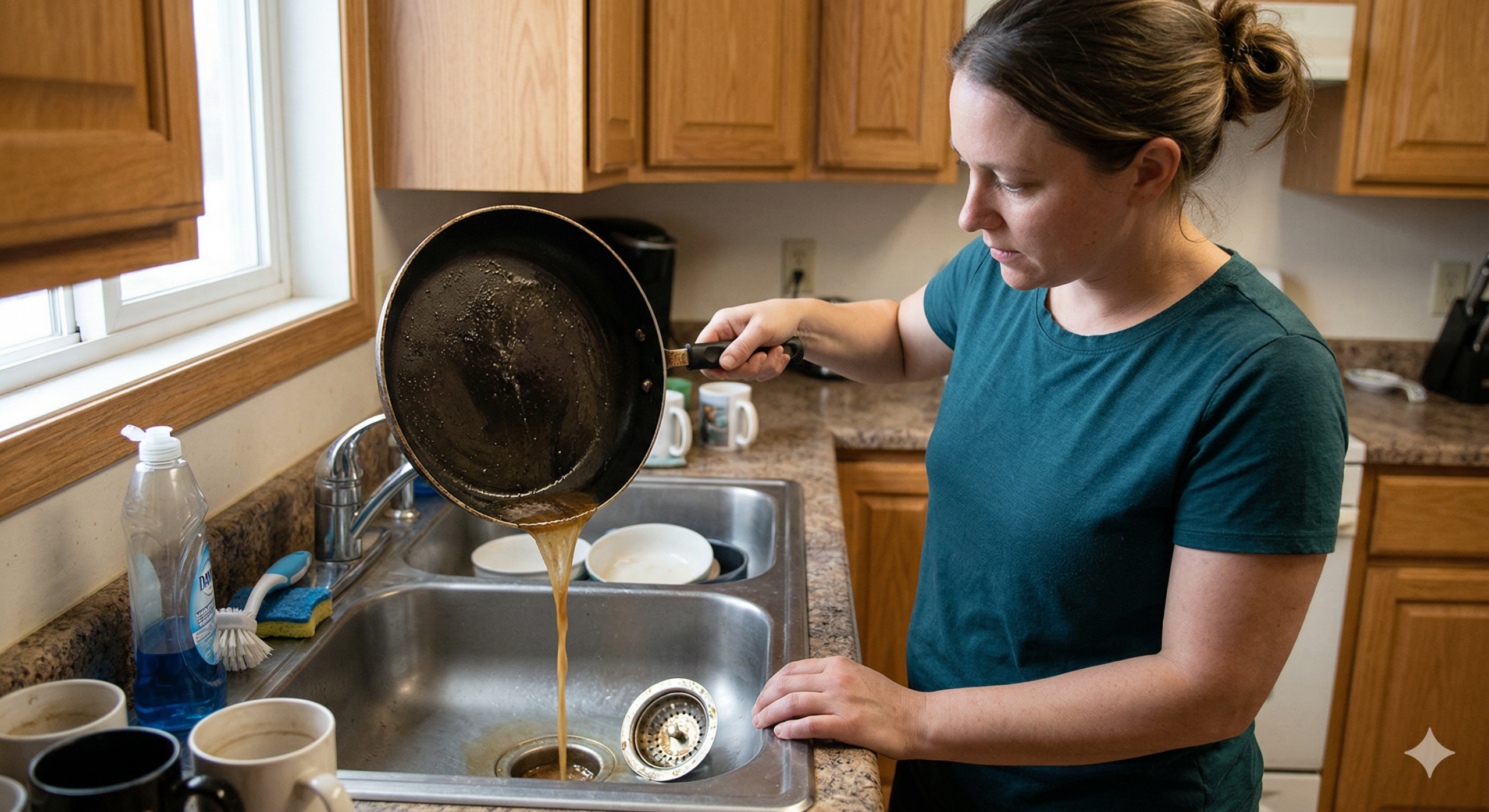
Fats, oils, and grease represent some of the most damaging substances that enter septic systems through household drains. When poured down the sink in liquid form, these materials cool and solidify inside pipes and within the tank itself. Over time, accumulated grease forms a thick layer that disrupts the natural separation of solids and liquids.
Cooking oil from frying, pan drippings, butter residue, and sauces should never enter the drain. Homeowners should collect grease in a container and dispose of it through regular waste collection. Even small amounts flushed with hot water eventually cool. This contributes to buildup that is costly to remove and damaging to system efficiency. Knowing what not to put down your drain starts with recognising grease as a consistent threat.
Wipes, Paper Products, and Hygiene Items
Flushable wipes are among the most misleading products on the market for septic system owners. Despite labelling claims, these wipes do not break down at the rate toilet paper does. They accumulate in tanks, contribute to clogs, and can physically block distribution lines. The same applies to paper towels, facial tissue, and cotton rounds. These are all designed for single use but not for decomposition in wastewater environments.
Feminine hygiene products, dental floss, cotton swabs, and bandages should also never be flushed. These items resist biological breakdown and can form tangled masses within the tank or distribution system. Disposing of them in the waste bin instead of the toilet is a simple habit that prevents significant mechanical problems and extends the time between required pump-outs. Understanding what not to put down your drain includes these frequently overlooked items.
Harsh Chemicals and Cleaning Products
Chemical drain cleaners, bleach, antibacterial soaps, and strong disinfectants can all reduce the bacterial populations inside a septic tank. The bacteria responsible for breaking down waste are sensitive to chemical disruption. Killing off too many bacteria slows decomposition, allows solids to accumulate faster than normal, and reduces overall system efficiency.
This does not mean homeowners must avoid all cleaning products. Moderate use of standard household cleaners in normal quantities is generally tolerable. However, concentrated chemicals used in large amounts or flushed directly down drains can cause measurable harm. Choosing septic-safe or biodegradable cleaning products reduces risk while still maintaining proper hygiene throughout the home.
Paint, solvents, pesticides, motor oil, and other hazardous substances must never enter the drain under any circumstances. These materials contaminate soil and groundwater, and Ontario’s environmental regulations make it clear that improper disposal of hazardous waste carries legal consequences. Municipalities across Ontario operate household hazardous waste depots for safe disposal.
Food Waste and Garbage Disposal Use
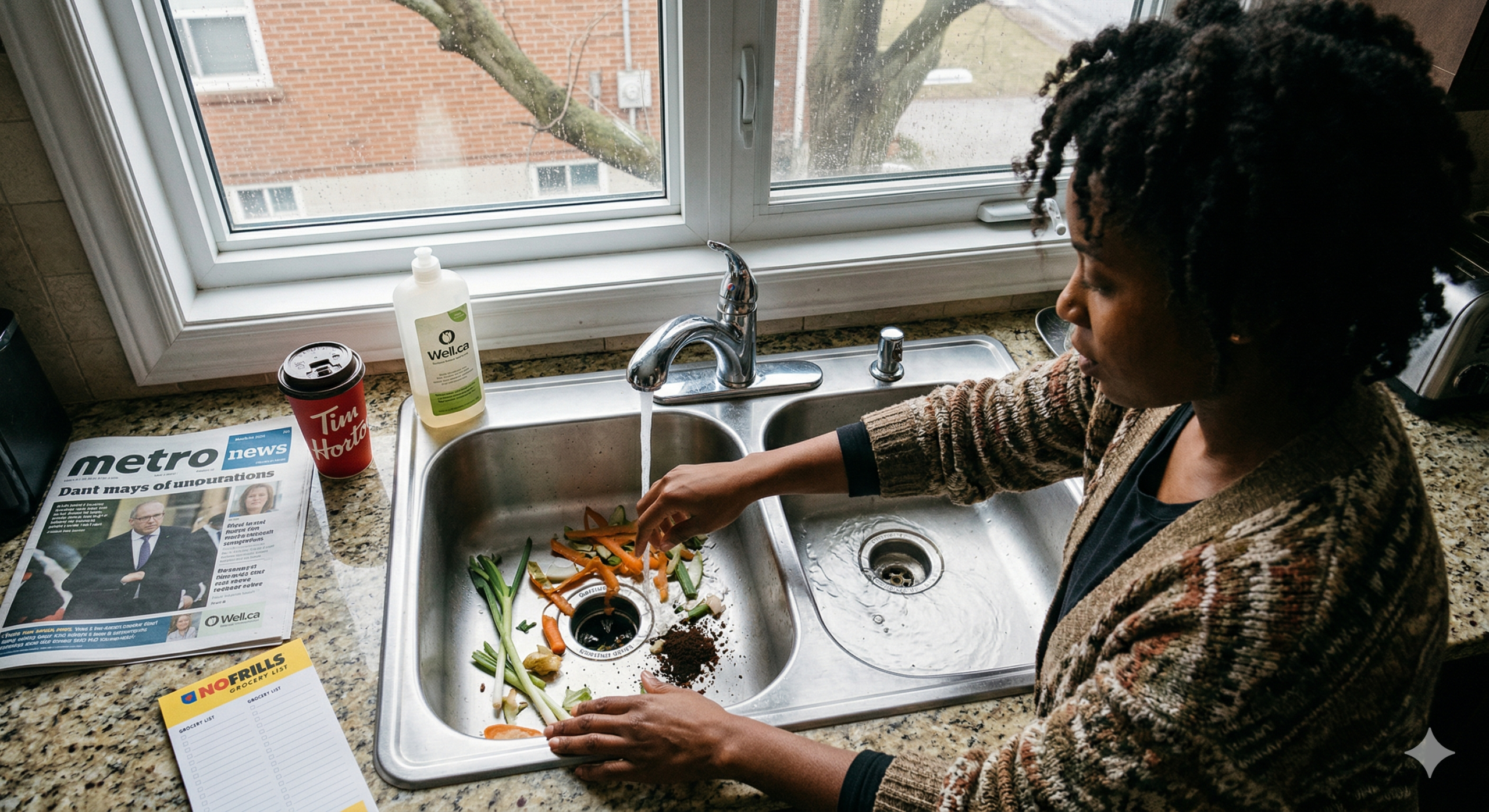
Homeowners with garbage disposals or garburators should use them with caution when connected to a septic system. Food solids introduced through the drain increase the load of organic material entering the tank. This accelerates the accumulation of the sludge layer. Systems servicing households that use disposals heavily require more frequent pump-outs and face higher risk of solids migrating into the leaching bed.
Coffee grounds, eggshells, fibrous vegetables, starchy foods, and bones are particularly problematic. These materials resist bacterial breakdown and settle in the tank rather than decomposing efficiently. Composting food waste or disposing of it through regular organics collection is a far better approach for homes on septic systems. Reducing food waste entering the drain is one of the clearest answers to the question of what not to put down your drain in a septic-served home.
Medications and Pharmaceutical Products
Unused or expired medications should never be flushed down the toilet or poured down the drain. Active pharmaceutical compounds pass through the septic system, enter the leaching bed, and can eventually reach groundwater or nearby water bodies. These substances are not filtered out through conventional soil absorption and can accumulate in ecosystems over time.
Ontario pharmacies participate in medication return programmes that allow safe disposal of unused drugs. Using these services keeps pharmaceutical waste out of the water supply and aligns with responsible environmental stewardship. The Ontario Onsite Wastewater Association also highlights the importance of protecting groundwater through careful household waste management, which extends beyond drain habits to disposal practices across the property.
Excess Water and Non-Organic Solids
Introducing large volumes of water in short periods can overwhelm a septic system, especially during winter months when the soil beneath the leaching bed remains partially frozen. Sump pump discharge, roof drainage, and foundation drainage should never be directed toward the septic field or into the household drain system. Excess water dilutes the bacterial environment in the tank and prevents proper settling of solids.
Cat litter, even products marketed as flushable, should never be flushed into a septic system. The clay or silica compounds used in litter products do not dissolve and accumulate at the bottom of the tank over time. Similarly, aquarium gravel, sand, and non-organic material introduced through drains add to the inorganic sludge that must eventually be pumped out by a professional.

The Role of Professional Installation and Site Planning
A septic system that begins with correct installation, proper soil assessment, and thoughtful site grading is better positioned to handle the demands placed on it over time.Experienced excavation professionals evaluate drainage patterns, soil permeability, and lot grading before installation begins, ensuring the system can process household wastewater efficiently under Ontario conditions.
Reviewing completed septic installation projects provides a practical sense of how site preparation, careful excavation, and proper grading support long-term system performance across different Ontario property types. The work that happens before the first drain is opened sets the foundation for everything that follows.
What Not to Put Down Your Drain: Building Long-Term Habits
Protecting a septic system does not require constant intervention. It requires consistent awareness of what enters the drain each day. Avoiding fats, chemicals, wipes, medications, and food solids preserves bacterial activity, reduces mechanical strain, and extends the interval between required maintenance. These habits, practised regularly, contribute more to system health than any single service call.
For homeowners who are uncertain about the current condition of their system or who have noticed signs of stress such as slow drains, odours, or wet patches near the leaching bed, reaching out to a qualified excavation and septic professional provides the clearest path forward. Early assessment prevents the kind of damage that turns a manageable issue into a full system replacement.
Understanding what not to put down your drain is ultimately about protecting property, environment, and community. In rural Ontario, where septic systems are the primary method of wastewater treatment, informed homeowners make a measurable difference in the health of the land and water around them. Responsible habits, combined with proper installation and periodic maintenance, keep systems functioning reliably through every season.