
Trees are one of the most valuable features on a property. They offer shade, beauty, privacy, and environmental benefits that increase a home’s overall appeal. During construction or excavation projects – whether you’re installing utilities, replacing a sewer line, or grading a yard – trees become vulnerable. The biggest risks come from damaging their root systems, which are far more expansive and sensitive than they appear above ground.
Understanding how to protect tree roots during excavation is essential for avoiding long-term damage, costly removal, or even the loss of mature trees that took decades to grow. With the right planning, construction techniques, and professional guidance, you can complete excavation work safely while preserving the health and longevity of your trees.
Why Excavating Around Trees Requires Special Care
Many homeowners underestimate how complex and fragile a tree’s root system is. While trunks and branches are visible, most of a tree’s life-support network lies hidden underground. Roots supply water, nutrients, and stability – and even minor disruptions can have long-lasting effects.
When excavation occurs too close to a tree, you risk:
- Reduced stability due to root loss
- Nutrient deficiency
- Increased susceptibility to pests
- Slowed growth or dieback
- Total tree failure within months or years
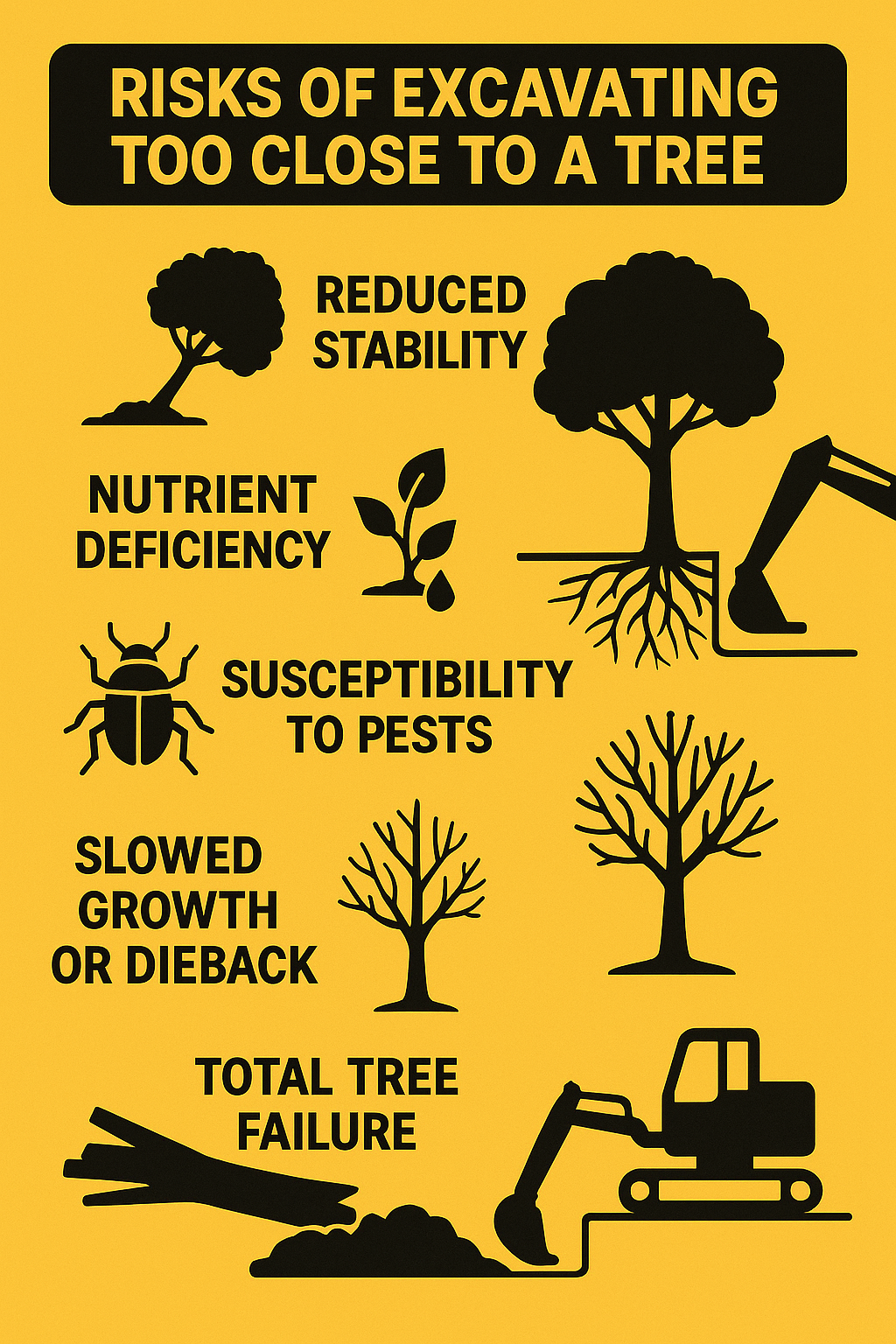
Roots are shallow and wide-spreading, and construction that seems harmless can have significant consequences.
The goal isn’t to avoid excavation – it’s to plan it properly. With a thoughtful approach and the right techniques, you can protect trees while still completing necessary construction work.
Understanding Root Zones: The Key to Safe Excavation
Before any excavation begins, it’s important to understand how far tree roots extend and which areas are most sensitive. Most trees have roots that spread far beyond the dripline – the outer edge of the tree’s canopy. In fact, roots often extend two to three times the width of the canopy, particularly in search of moisture and nutrients.
The Critical Root Zone (CRZ)
The Critical Root Zone is the area most responsible for a tree’s health and structural support. It typically stretches from the trunk outward to the dripline. Any disturbance in this zone can significantly impact the tree’s long-term survival.
When planning excavation, always aim to avoid the CRZ. If it cannot be avoided entirely, minimizing the depth and width of excavation within this zone is crucial.
How Construction Activities Can Harm Tree Roots
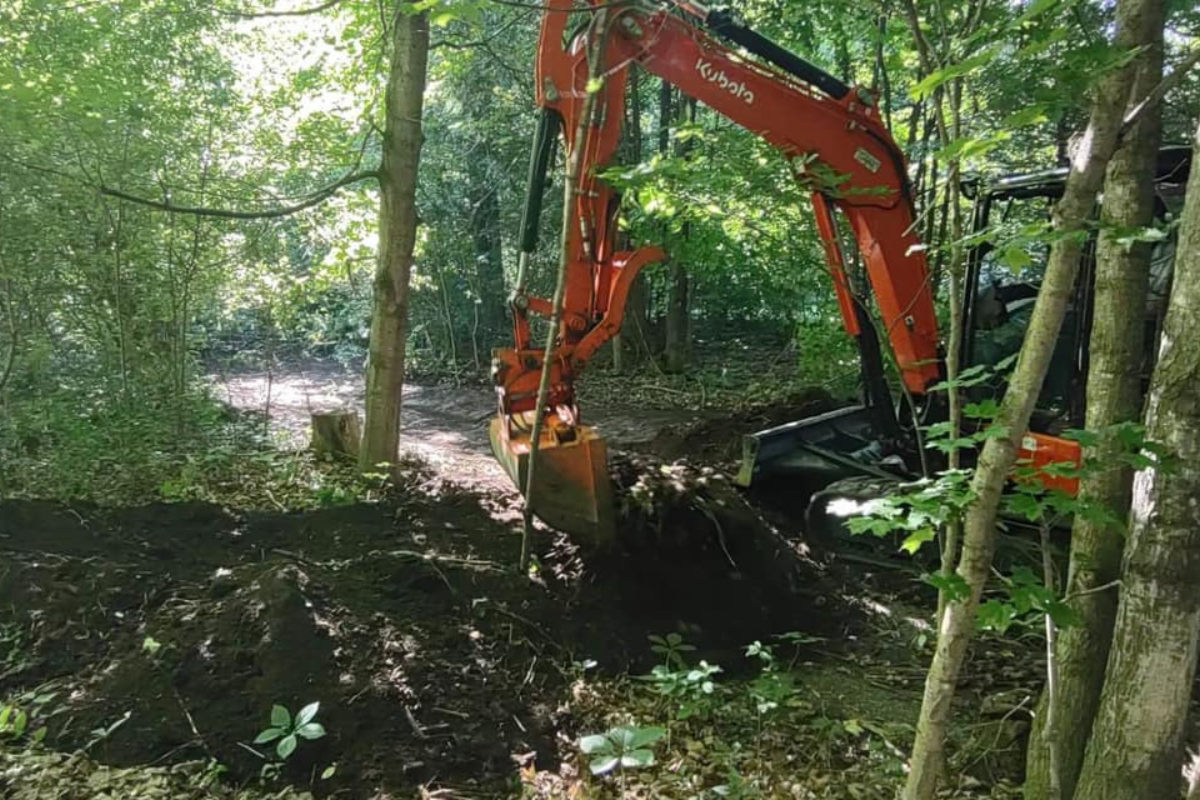
Even small construction projects can have a major impact on tree root systems. Understanding how different activities affect roots helps guide safer planning.
1. Trenching
Trenching for utilities is one of the most common causes of root damage. Cutting across the root system disrupts nutrient uptake and weakens the tree’s overall structure.
2. Grading
Adding or removing soil can suffocate roots or expose them to environmental stress. Roots need oxygen to survive, and too much soil compaction or added fill can starve them of it.
3. Heavy Equipment Traffic
The weight of excavation or construction machinery can compress soil, reducing the air pockets that roots rely on for respiration.
4. Root Exposure
When excavation exposes roots to air and sunlight, they dry out quickly. Prolonged exposure can kill roots, especially in hot or windy conditions.
These risks are so common, it makes the need for professional planning essential before any digging takes place.
How to Protect Tree Roots During Excavation
Successfully excavating around trees requires a combination of best practices, protective barriers, and careful technique. The following strategies can significantly reduce the risk of root-related damage.
Conduct a Pre-Construction Assessment
A certified arborist can identify the tree species, root structure, and overall health before any excavation begins. Understanding these factors helps determine how close excavation can safely occur.
Mark and Establish Tree Protection Zones
Use fencing or flagged boundaries around the dripline or CRZ to clearly mark where equipment and workers should not enter. These zones prevent accidental damage and soil compaction.
Use Hand Digging When Possible
When excavation must occur near a tree’s root system, hand digging or air excavation is far safer than using heavy machinery. These methods allow workers to locate and navigate around roots carefully.
Avoid Cutting Large Structural Roots
If a root larger than two inches in diameter must be cut, it can significantly affect the tree’s stability. When possible, adjust the trench path to avoid cutting major roots.
Manage Exposed Roots Immediately
If roots become exposed during excavation, cover them with burlap or mulch and keep them moist to prevent drying.
Minimize Soil Compaction
Limit the use of heavy equipment within root zones. If access is required, using mats or boards can help distribute weight and reduce soil compression.
Monitor Tree Health Post-Construction
After excavation, trees can experience delayed stress responses. Regular watering, mulch application, and professional inspections can help support recovery.
Common Mistakes to Avoid When Excavating Around Trees
Many issues arise not from the excavation itself but from poor planning. Avoiding these common mistakes helps protect both your trees and your investment in the construction project.
Failing to Assess Root Depth and Spread
Assuming roots exist only near the trunk leads to uninformed digging. A proper assessment ensures machinery and trench placement minimize harm.
Ignoring Tree Protection Zones
Even when boundaries are set, workers sometimes enter out of convenience. Reinforcing these zones and using physical barriers prevents accidental damage.
Improper Storage of Materials
Placing heavy materials – like gravel, soil, or lumber – within the CRZ can suffocate roots or compact the soil.
Rushing Construction
Tight deadlines sometimes lead crews to take shortcuts around protected areas. Taking the time to excavate carefully can prevent years of future tree decline.
How to Balance Construction Needs With Tree Preservation
Excavation doesn’t need to come at the expense of your trees. With the right approach, you can complete construction projects efficiently while protecting your property’s most valuable natural features.
Best practices at a glance:
- Identify and map out the Critical Root Zone before digging
- Limit excavation depth and width within sensitive areas
- Use hand digging or air spading when working close to roots
- Maintain clear tree protection zones with fencing
- Keep exposed roots moist and covered
- Avoid cutting large structural roots
- Reduce soil compaction by limiting equipment traffic
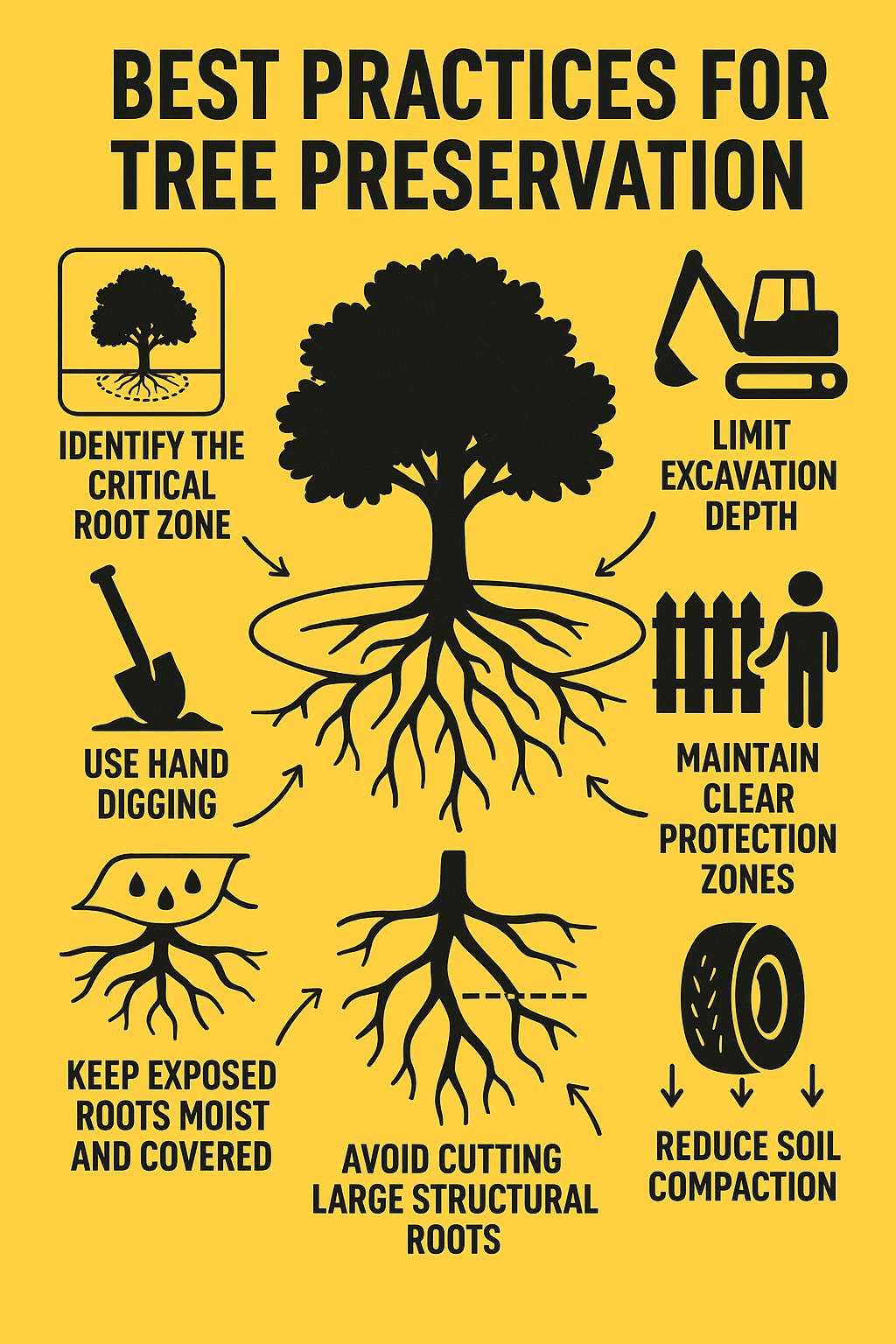
These steps create a safer, more predictable excavation process and dramatically lower the risk of long-term tree damage.
Why Professional Excavation Makes All the Difference
Even small excavation projects can quickly become complicated when trees are involved. Professional excavation contractors understand how to work around sensitive root systems and use techniques that minimize disturbance while still completing the job effectively.
Experienced crews also coordinate with arborists when necessary, ensuring both construction goals and landscape preservation are met. This level of planning prevents unexpected delays, costly tree removals, and structural issues that can develop years after careless digging.
Attempting to excavate near trees without professional guidance can lead to preventable damage – damage that may not be noticeable until the tree begins declining long after construction is finished. Investing in professional planning upfront helps protect your property and its long-term value.
Ready to Start Your Project or Need Expert Advice?
Protecting your trees during excavation doesn’t have to be complicated – you just need the right team and a plan that respects their root systems. Whether you’re preparing for a utility installation, foundation repair, grading work, or other construction projects, a professional assessment ensures the job gets done safely and correctly. When you’re ready to speak with a professional or request a quote for safe, strategic excavation around trees, you can reach the M. Riddle team directly for quality advice.