
Building on a sloped or waterfront lot comes with undeniable advantages – panoramic views, natural privacy, and unique architectural opportunities. These lots also bring complications that a flat site simply doesn’t have. Soil movement, water runoff, erosion, and foundation pressure are all magnified by the natural grade of the land. This is why excavation for sloped lots must be approached with an entirely different strategy than standard residential excavation. When performed correctly, it sets the stage for a stable foundation, manages water effectively, and protects the surrounding environment for decades to come.
Sloped and waterfront lots are especially sensitive to moisture. Water naturally moves downhill, and when it does, it carries soil with it. That runoff can wash away topsoil, weaken structural supports, and cause long-term issues that impact the integrity of a home. On waterfront lots, fluctuating water levels and storm activity add even more pressure. High-quality excavation for sloped lots creates a controlled path for water, reinforces the soil, and prepares the site for safe, durable construction.
Why Sloped & Waterfront Lots Need Specialized Excavation
Many homeowners underestimate how much engineering goes into preparing a challenging site. The land itself can shift unpredictably if excavation is not planned with precision. Sloped lots often contain varying soil types – layers of clay, sand, and loam – that respond differently to moisture. Without proper drainage pathways, that moisture builds pressure against foundations. Waterfront sites add tidal changes, wave action, and rising water tables to the mix.
Contractors experienced in excavation for sloped lots understand how gravity impacts both the soil and the structure built on top of it. They analyze how water flows across the property, how quickly the soil absorbs moisture, how deep the bedrock is, and how much reinforcement the slope will need. This detailed planning phase determines how stable the structure will be years after construction.
How Excavation for Sloped Lots Works
The process of excavation for sloped lots begins with a thorough site assessment. Before any digging occurs, contractors evaluate the slope angle, existing vegetation, drainage patterns, soil type, and any potential environmental concerns. On steeper lots, a geotechnical engineer may be brought in to assess soil compaction and stability. Understanding the soil’s behaviour is critical because the excavation work will alter the slope’s natural support system. If this step is rushed, the entire build can face long-term issues.
Once the assessment is complete, engineers and excavation specialists collaborate to design a grading plan. Proper grading controls how water travels across the property. On a sloped lot, the goal is to direct water away from the foundation and prevent it from accumulating in vulnerable areas. Grading often involves cutting into the hillside to create flat building pads or stepping the foundation so it follows the natural grade rather than fighting against it. Precise planning like this ensures the foundation has stable footing, especially after weather events that cause the ground to shift or saturate.
The foundation stage is where excavation for sloped lots becomes more specialized. Instead of a simple dig, the team may create terraced levels, reinforced pads, or stepped foundations. On certain lots, retaining walls become a structural necessity rather than a landscaping feature. These walls help support the soil, reduce pressure on the foundation, and create level areas for construction. In some cases, the site may require deep footings or engineered backfill materials that improve compaction and long-term performance.
Drainage installation is also a major element of excavation for sloped lots. Even a perfectly graded lot will experience significant water flow during storms or spring thaw, so the drainage system must give that water a controlled path away from the home. This makes proper drainage installation one of the most important components of excavation for sloped lots. To see how these systems perform in real-world conditions, explore our drainage and waterproofing project results and learn how strategic planning prevents long-term water damage. French drains, perforated piping, slope swales, sump discharge lines, and dry wells are all commonly used to redirect moisture safely across the property. On waterfront sites, additional strategies – such as shoreline grading, riprap reinforcement, and permeable hardscaping – help manage water movement while protecting the surrounding ecosystem.
Stabilizing the slope is the final step in the excavation process. This often includes using geogrid mesh, planting deep-rooted vegetation, reinforcing soil with engineered materials, or installing retaining structures. When slope stabilization is integrated into the original excavation for sloped lots plan, it protects the property from erosion, reduces long-term maintenance, and prevents the slow shifting that damages foundations and walkways.

Drainage Planning for Waterfront Construction
Waterfront lots require unique expertise, even compared to steep hillside sites. The drainage risk is two-fold: surface runoff from higher ground and moisture intrusion from the water body itself. If excavation for sloped lots is the foundation of a safe build, drainage planning is the backbone of a waterfront property’s long-term performance.
Waterfront drains must be designed to move water away from the foundation while accommodating rising water tables. This may mean using deeper drainage tile, backflow-protected discharge lines, or specialized retaining walls with weep holes that relieve pressure. Proper shoreline grading ensures that runoff doesn’t erode the shoreline or cause washouts, which can be expensive to repair. Drainage planning also preserves the surrounding natural environment by preventing sediment displacement.
Construction on waterfront properties also requires adherence to environmental regulations. Before excavation begins, contractors often need permits related to shoreline alterations or soil displacement. Reinforcement materials like riprap or gabion baskets may be installed to secure the shoreline. Because water levels fluctuate, all materials used during excavation for sloped lots on waterfront properties must withstand consistent moisture exposure.
Technology Used in Modern Sloped-Lot Excavation
Today’s excavation teams use advanced tools to achieve precise results on difficult terrain. 3D mapping and grade-control systems allow contractors to sculpt the land with accuracy down to millimeters. Drones are often deployed during the planning phase to capture elevation changes and slope patterns that aren’t visible from the ground. Mini-excavators and tracked machinery offer improved traction and control on steep grades, ensuring a smoother excavation process and fewer soil disturbances.
These technological advancements improve safety, reduce project timelines, and enhance the overall accuracy of excavation for sloped lots. They also help contractors detect potential issues – such as soft soil pockets or shallow bedrock – before construction begins. Early detection prevents costly surprises that would otherwise surface during the foundation stage.
Signs Your Sloped Lot Needs Drainage or Excavation Work
Even after construction is complete, sloped and waterfront lots require ongoing monitoring. Homeowners often notice subtle changes that signal drainage issues or soil instability. pooling water near the home
- soil shifting, slipping, or pulling away
- cracks forming in retaining walls
- moisture collecting in the basement
- exposed roots or eroding shoreline
- uneven or heaving walkways
- soggy ground that never fully dries
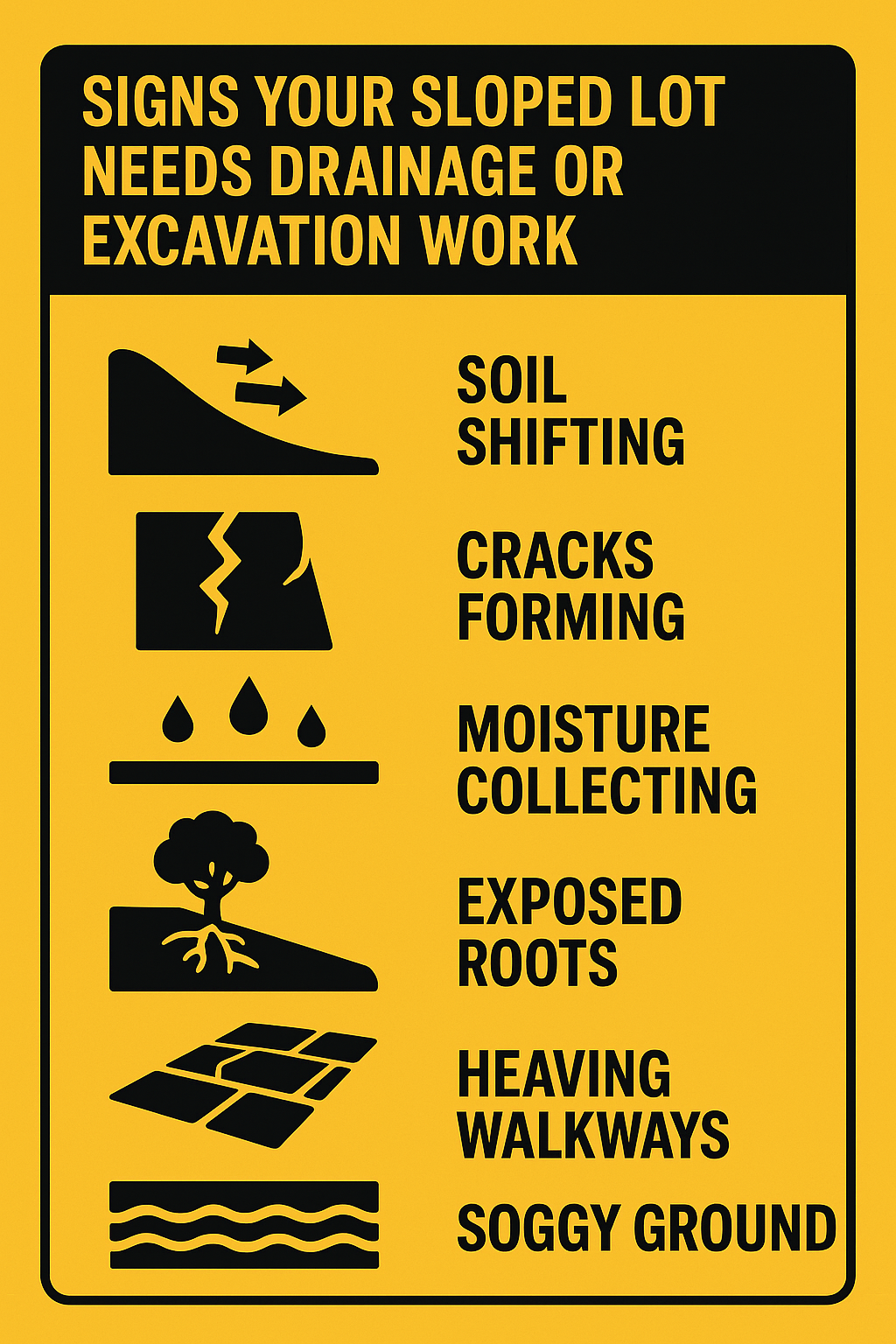
If any of these symptoms appear, it’s a strong indicator that the property needs professional excavation or drainage repair. The safest next step is to contact M. Riddle Excavating for an expert assessment and customized solution.
Long-Term Value of Proper Sloped-Lot Excavation
When homeowners invest in proper excavation for sloped lots, they’re not just preparing the land – they’re protecting their home for decades. A stable slope reduces foundation movement, prevents leaks, preserves landscaping, and protects the shoreline. It also increases property value because buyers recognize the importance of well-designed site preparation.
Homes built on challenging lots are highly sought after, but their longevity depends entirely on whether the land was prepared correctly. Poor excavation may not cause immediate issues, but over time the effects become clear: shifting soil, unstable decks, cracked foundations, eroding shorelines, and water damage that spreads from the exterior inward. Good excavation prevents all of this.
Final Thoughts
Sloped and waterfront lots offer incredible building opportunities, but they require an advanced understanding of soil behavior, water movement, and environmental constraints. Thoughtfully executed excavation for sloped lots ensures the home remains stable, dry, and protected from natural forces that would otherwise cause long-term damage. From grading and foundation design to drainage planning and slope stabilization, every step in the process plays a critical role.