
Excavation projects often start with a simple question: How deep can I dig? Whether you’re installing drainage, repairing a foundation, replacing a sewer line, or preparing for a new structure, Ontario’s excavation regulations set strict requirements to protect people, property, and underground infrastructure. If you ignore these rules, you risk fines, delays, safety hazards, and costly repairs.
Ontario’s excavation rules aren’t just red tape – they prevent collapses, protect utility lines, and keep excavation work safe and responsible. Unfortunately, many homeowners (and even some contractors) misunderstand where these rules apply, when they need permits, and which responsibilities the property owner must carry.
This guide breaks down Ontario’s excavation regulations in plain language, explains how depth impacts compliance, and outlines what you need to know before digging begins.
Why Excavation Rules Exist in Ontario
Excavation is one of the most dangerous construction activities. Soil conditions vary widely across Ontario, underground utilities are often poorly documented on older properties, and even shallow digs can pose serious risks. Ontario’s excavation rules exist to manage these risks by setting minimum safety standards for excavation depth, soil support, and utility protection.
The primary goals of these rules include preventing trench collapses, reducing worker injuries, protecting public infrastructure, and minimizing damage to adjacent properties. Even residential excavation projects must follow these standards when they exceed depth thresholds or take place near utilities, structures, or roadways.
Failing to follow excavation regulations doesn’t just create liability for contractors – it can also impact homeowners, especially when work is performed without permits or required locates.
How Deep Can You Dig Without Special Requirements?
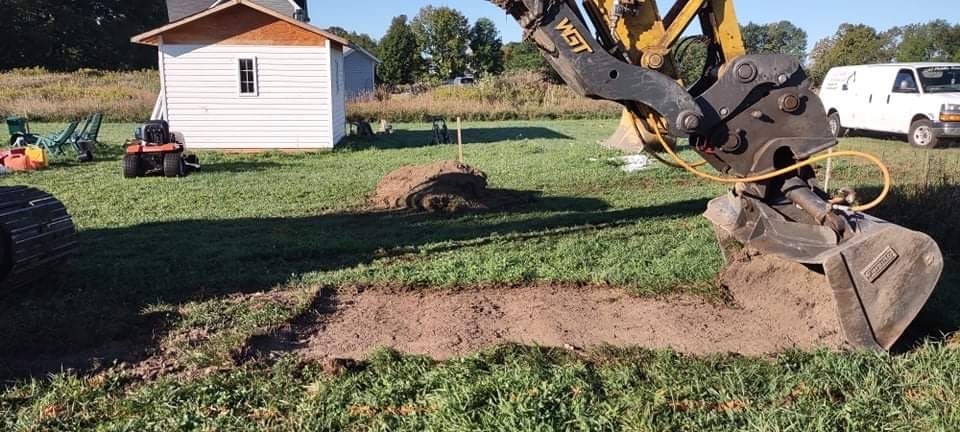
Depth plays a major role in determining which excavation rules apply. In Ontario, excavation safety requirements begin well before most people expect.
Generally speaking, excavations deeper than 1.2 metres (approximately 4 feet) trigger specific safety requirements under Ontario Regulation 213/91 (Construction Projects). At this depth, soil stability becomes a serious concern, and protective measures are often required to prevent collapse.
These measures may include sloping, benching, trench boxes, or engineered shoring systems, depending on soil type and site conditions. The deeper the excavation, the more stringent the requirements become.
Even excavations shallower than 1.2 metres may still require permits or locates, particularly if they occur near property lines, utilities, or existing structures.
When Permits Are Required for Excavation in Ontario
Permits are not based solely on depth. Ontario’s excavation rules tie permitting requirements to location, purpose, and potential impact on surrounding infrastructure.
Permits are commonly required when excavation involves foundation work, sewer or water connections, drainage systems, work near municipal road allowances, or any project that alters grading or stormwater flow. Municipal requirements vary, so homeowners must confirm rules with their local building department before work begins.
In many cases, excavation tied to a building permit automatically includes excavation approval. However, standalone excavation projects – such as drainage correction or culvert installation – may still require permits depending on scope and location.
Failing to obtain the proper permits can result in stop-work orders, forced restoration, fines, or denial of future permits.
Utility Locates Are Mandatory – No Exceptions
One of the most important aspects of Ontario’s excavation rules is mandatory utility locating. Before any digging begins, property owners or contractors must request locates through Ontario One Call.
Ontario One Call coordinates with utility providers to mark underground infrastructure such as gas lines, electrical cables, water mains, and telecommunications services. These locates are free, legally required, and valid for a limited time.
Excavating without locates is one of the most common – and most serious – violations of excavation regulations. Striking a utility line can cause service outages, environmental damage, injury, or worse.

Soil Type and Site Conditions Matter More Than You Think
Ontario’s excavation regulations recognize that not all soil behaves the same. Clay, sand, silt, and fill material each react differently when disturbed. This is why excavation rules account for soil classification when determining safety measures.
For example, cohesive clay soils may stand temporarily but fail suddenly without warning. Sandy soils, on the other hand, can collapse quickly and unpredictably. Groundwater presence further complicates excavation safety by weakening soil structure and increasing collapse risk.
Due to these variables, professional excavation contractors assess soil conditions before digging and adjust techniques accordingly. This assessment often determines whether additional safety systems or engineering approvals are required.
Who Should Follow Excavation Rules?
Many homeowners assume responsibility lies entirely with the contractor – but that’s not always the case. Under Ontario law, multiple parties share responsibility for compliance with excavation rules.
Property owners can face liability if they move ahead without permits, utility locates, or proper safety measures. Contractors must implement safe excavation practices, and supervisors must ensure the crew follows regulations on-site.
This shared responsibility is why hiring experienced, properly insured excavation professionals is critical. Reputable contractors understand Ontario’s regulatory framework and manage compliance proactively.
Common Excavation Mistakes That Lead to Violations
Despite clear regulations, excavation violations remain common across Ontario. These issues often stem from misunderstanding the scope of excavation rules or attempting to cut corners.
Let’s highlight the most frequent mistakes:
- Digging without requesting utility locates
- Assuming shallow excavation doesn’t require compliance
- Failing to obtain municipal permits
- Ignoring soil conditions or groundwater
- Excavating too close to foundations or property lines
- Not providing proper trench protection
- Proceeding with work after locates expire
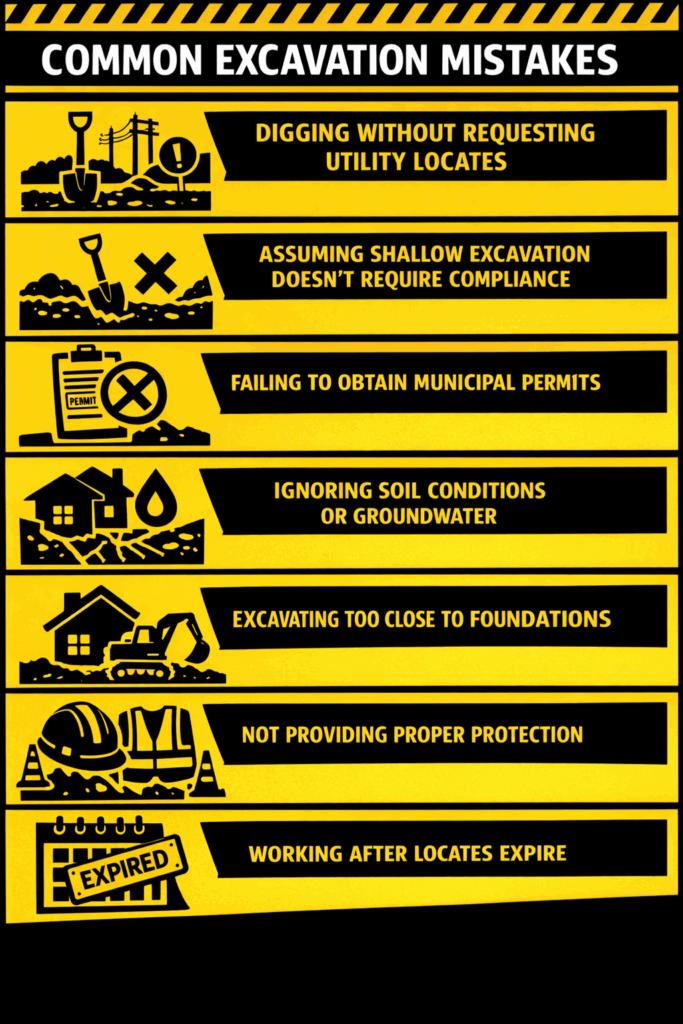
Each of these mistakes can result in delays, fines, or safety hazards that far exceed the cost of doing things properly from the start.
Why Professional Excavation Makes Compliance Easier
Navigating Ontario’s excavation rules can be complex, especially for homeowners unfamiliar with construction regulations. Professional excavation contractors manage this complexity by coordinating permits, arranging locates, assessing soil conditions, and implementing safe excavation methods.
Experienced crews also understand how excavation impacts drainage, grading, and long-term site stability. Improper excavation can create issues years later, including water infiltration, foundation movement, or erosion.
If your project involves drainage correction, foundation exposure, or subsurface work, reviewing professional excavation examples can help set expectations.
How Excavation Rules Protect Homeowners in the Long Run
While excavation regulations may feel restrictive, they ultimately protect property owners. Following Ontario’s excavation rules keeps the work safe, reduces liability, and protects your property’s long-term integrity.
Proper excavation minimizes the risk of underground damage, prevents soil instability, and supports correct drainage patterns. It also ensures that future projects or property sales are not complicated by unpermitted or non-compliant work.
In many cases, excavation problems don’t appear immediately. Issues like settling, cracking, or water infiltration often show up months or years later – long after the original work ends. Compliance with excavation rules significantly reduces these risks.
Planning an Excavation Project? Start With the Right Team
Whether you’re planning drainage work, foundation repairs, or utility excavation, understanding Ontario’s excavation rules is essential before breaking ground. Depth, location, soil conditions, and permitting all play a role in how excavation must be approached.
If you’re unsure what regulations apply to your property or want a professional assessment before starting your project, connect with us to start working with an experienced excavation contractor who ensures compliance from day one.