
Septic systems in winter require careful attention in Ontario’s climate. Extended periods of freezing temperatures, deep frost penetration, and heavy snow accumulation can all affect how a system performs. Many homeowners assume their septic system operates the same year round, but winter introduces specific risks that demand proactive planning. Frozen pipes, compacted snow cover, and reduced bacterial activity can all impact system efficiency and long term reliability.
Understanding how septic systems in winter behave under Ontario soil and weather conditions helps homeowners prevent costly repairs and emergency service calls. Proper site preparation, insulation practices, and responsible water usage protect both the tank and the leaching bed throughout the cold season.
Why Septic Systems in Winter Face Higher Risk in Ontario
Ontario’s winter conditions create unique challenges for subsurface systems. Frost depth can extend well below the surface depending on soil type, snow cover, and exposure to wind. Sandy soils drain quickly but may not retain heat as effectively, while clay based soils hold moisture and can freeze more aggressively when saturated.
Septic systems in winter rely on natural biological processes that slow down in colder temperatures. The bacteria inside the tank continue breaking down waste, but extreme cold can reduce efficiency if the tank or pipes lose insulation. According to guidance on onsite wastewater management, proper installation depth, insulation, and soil coverage are critical to protecting septic infrastructure from freezing and system failure in cold climates. These best practices exist to reduce the risk of contamination, surface discharge, and costly winter breakdowns while supporting long term environmental protection.
How Freezing Occurs in Septic Systems in Winter
Septic systems in winter typically freeze due to a combination of factors rather than one single cause. Insufficient soil cover over pipes, compacted snow from vehicle traffic, inconsistent water usage, or shallow installation depths all contribute to freezing risks.
Snow actually acts as insulation. When homeowners clear snow directly above their septic tank or leaching bed, they remove a natural thermal blanket. Without that insulation layer, frost penetrates deeper into the soil and increases the risk of frozen effluent lines.
Low occupancy properties also face higher risk. A cottage or secondary residence that sees minimal winter use does not generate enough warm wastewater to maintain internal system temperature. The lack of regular flow allows standing water in pipes to cool and freeze more easily.
When freezing occurs, homeowners may notice slow draining fixtures, gurgling sounds, or sewage backups. At that point, professional assessment becomes critical. Attempting to thaw frozen septic systems in winter without proper equipment can damage pipes or compromise the leaching bed.
The Role of Proper Installation and Site Grading
Correct installation plays a significant role in how septic systems in winter perform. Burial depth, soil compaction control, and drainage grading determine whether frost can reach sensitive components.
Excavation professionals evaluate soil conditions before installation to ensure proper base preparation and backfill compaction. They also shape grading to direct surface water away from the tank and bed. Water accumulation around a septic field increases saturation, which makes soil more susceptible to freezing.

Managing Water Usage During Cold Months
Water usage patterns directly affect septic systems in winter. Consistent daily water flow helps maintain internal warmth and supports bacterial activity. Long gaps without usage increase freezing risk.
Spreading laundry loads throughout the week rather than running multiple loads in one day prevents sudden surges that overload the system. At the same time, homeowners should avoid extremely low usage during occupied periods. Balanced flow maintains stable operating temperatures.
Fixing leaking faucets or running toilets becomes even more important in winter. Excess water entering the tank can oversaturate the leaching bed, especially if the ground beneath remains partially frozen. Frozen soil cannot absorb effluent efficiently, which increases the potential for surface pooling or backups.
Snow Cover, Traffic, and Surface Protection
Protecting the area above septic systems in winter requires thoughtful snow management. While snow should remain in place for insulation, vehicle or heavy equipment traffic must be kept off the tank and leaching bed. Compacted snow loses insulating value and increases frost penetration.
Homeowners should mark the location of septic components before snowfall begins. This prevents accidental parking or snow piling over sensitive areas. Pushing large amounts of plowed snow onto the leaching bed can add excess weight and alter drainage patterns during spring thaw.
In rural Ontario properties where driveways cross near septic components, planning access routes carefully reduces long term risk. Experienced excavation contractors factor in these considerations during the site assessment, minimizing future conflicts between property use and underground infrastructure.
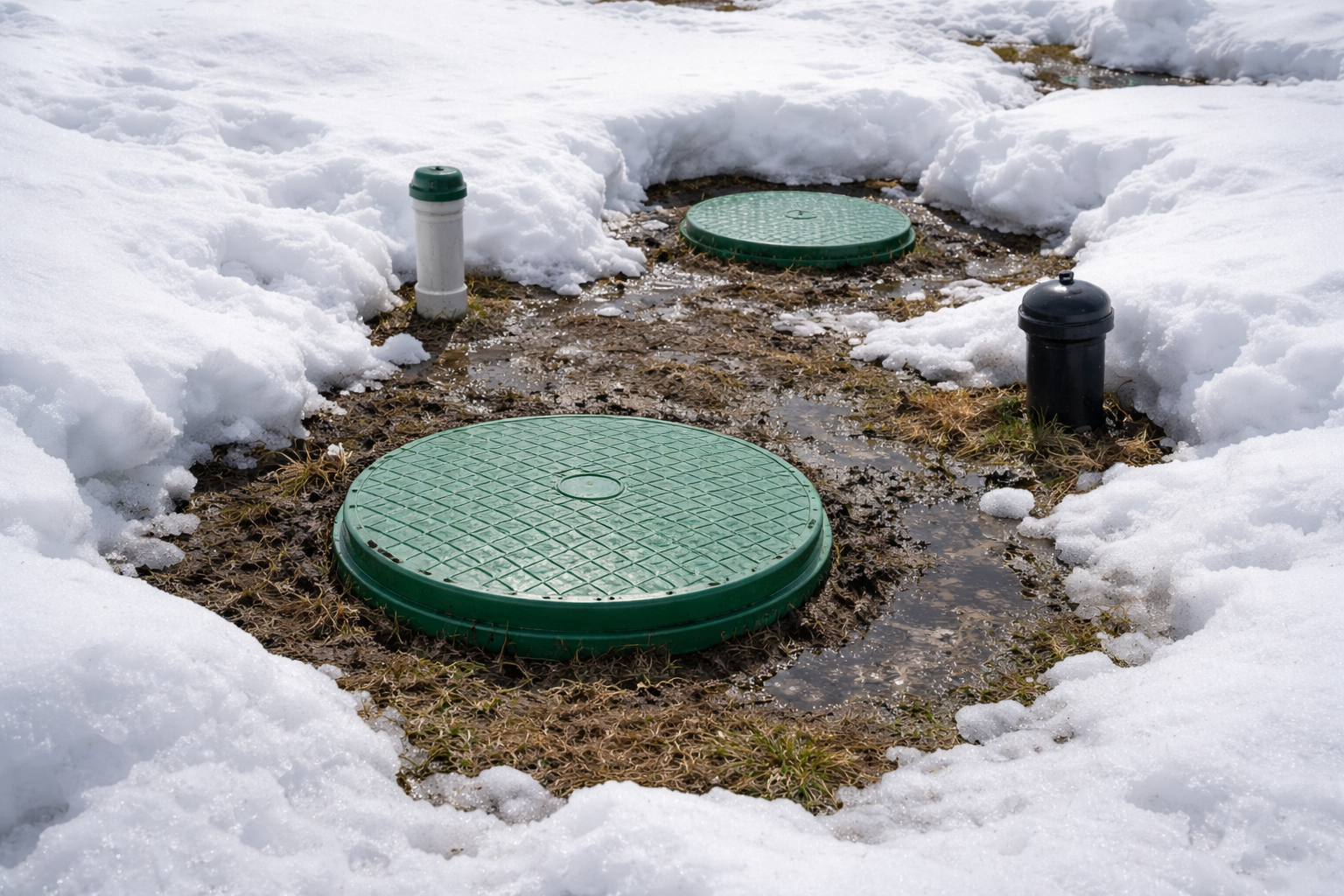
Signs of Trouble With Septic Systems in Winter
Recognizing early warning signs helps prevent extensive damage. Slow drains, sewage odours, wet spots above the bed, or unusually lush vegetation during winter can signal system stress. Ice formation on the surface above the leaching bed may indicate effluent reaching shallow levels due to frozen soil.
If homeowners suspect issues with septic systems in winter, they should avoid adding antifreeze, salt, or chemical additives. These products can disrupt bacterial balance and contaminate surrounding soil. Instead, contacting a qualified excavation and septic professional ensures proper diagnosis.
Preventative Measures Before Winter Arrives
Preparation during autumn reduces the likelihood of winter complications. Pumping the septic tank if it approaches capacity prevents solids from entering the leaching bed during freeze periods. Insulating exposed pipes and ensuring risers and lids fit securely also strengthens system resilience.
Homeowners should confirm that downspouts, sump pump discharge lines, and surface drainage direct water away from the septic field. Excess water saturation before freeze up increases vulnerability once temperatures drop.
The Ontario Onsite Wastewater Association offers a guide to proper septic maintenance and seasonal preparation. Consulting authoritative industry associations reinforces best practices and helps homeowners stay aligned with provincial expectations.
Although preventative work may seem minor, it plays a major role in protecting septic systems in winter from stress related failures.
Spring Thaw and Long Term Performance
Septic systems in winter transition into another vulnerable period during spring thaw. As frost leaves the ground, saturated soils struggle to absorb wastewater efficiently. Heavy snowmelt combined with spring rain can overwhelm systems that experienced minor freezing or compaction during winter.
Homeowners should monitor drainage patterns and avoid driving over the leaching bed during thaw conditions. Soft ground combined with heavy weight can permanently damage distribution pipes and soil structure.
Protecting Property Value Through Proper Winter Care
A well maintained septic system contributes directly to property value and long term land stability. In rural Ontario communities where municipal sewer service is unavailable, septic systems represent essential infrastructure. Winter neglect can lead to contamination, soil degradation, and expensive system replacement.
Septic systems in winter demand awareness rather than constant intervention. When homeowners understand how frost, snow cover, soil saturation, and water usage interact, they can make informed decisions that protect their investment.
Professional excavation practices, adherence to Ontario regulations, and responsible homeowner maintenance combine to ensure reliable performance year after year. Real world examples of properly planned septic installations and site preparation work demonstrate how thoughtful grading, soil management, and drainage control contribute to long term system stability, as seen across a range of completed excavation projects throughout Ontario.
By preparing proactively and responding quickly to warning signs, homeowners can keep septic systems in winter functioning safely and efficiently despite the province’s demanding climate.
Get a Free Septic Quote
Get a free quote today. Call M. Riddle Excavating at 613-545-7955 or request a free quote online. Learn more about our septic design and installation services in Kingston and Frontenac County.