
Summer is the most productive season for outdoor work in Ontario. Many homeowners take advantage of the warmer months to tackle improvements. Whether installing a new driveway, upgrading drainage, adding a septic system, or levelling a yard for a structure, summer property projects offer the ideal window for meaningful site work. However, the success of these improvements depends heavily on what happens beneath the surface before any visible work begins. Proper ground preparation is not a preliminary step that can be rushed or skipped. It is the foundation on which every other element of the project depends.
Ontario’s varied soil conditions, seasonal frost effects, and clay-heavy terrain create real challenges for summer property projects. When excavation professionals assess a site correctly, the finished work performs better, lasts longer, and avoids the costly failures.
Why Ground Preparation Defines the Outcome of Summer Property Projects
Many homeowners focus on the finished product of a summer project without fully considering what lies beneath. A new interlock driveway looks attractive, but it will shift, crack, and heave within a few seasons. This is especially the case if the contractor did not properly grade, compact, and prepare the subgrade beneath it. The same logic applies to septic systems, retaining walls, outbuildings, and drainage improvements.
Ontario’s soil composition varies significantly across regions. Sandy soils in certain rural areas drain quickly but offer inconsistent bearing capacity, while the clay-heavy soils found throughout much of eastern Ontario retain moisture, expand when wet, and shrink during dry spells. According to Ontario’s soil information resources, understanding local soil behaviour is critical to designing structures and surfaces that perform reliably. For summer property projects, this means a site assessment is not optional. It is the starting point for every decision that follows.

Driveway and Laneway Installations
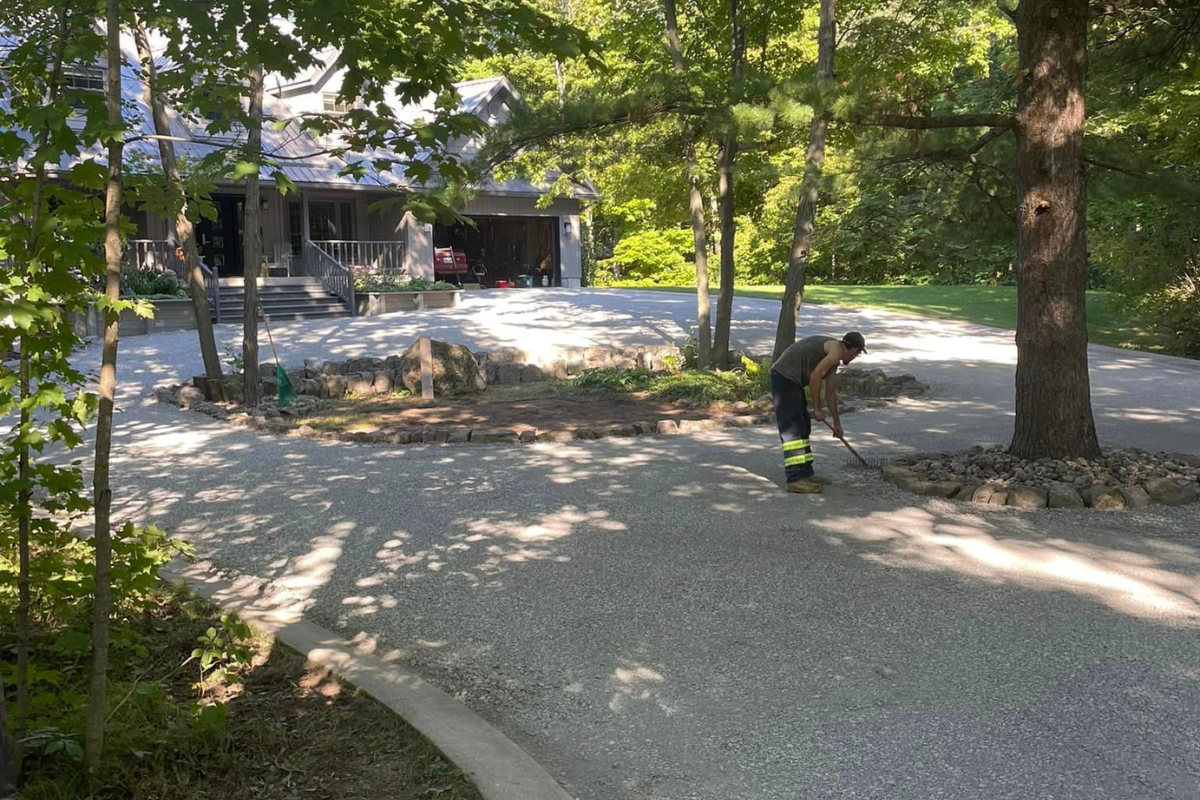
Driveways rank among the most common summer property projects undertaken by Ontario homeowners. Particularly those with rural or semi-rural lots where gravel, asphalt, or compacted laneways serve both practical and aesthetic purposes. A well-built driveway begins with proper excavation of the existing surface material, removal of organic matter, and the creation of a stable subbase that supports drainage and load distribution.
Organic material left beneath a driveway surface decomposes over time, creating voids and soft spots that cause settling and surface failure. Excavation professionals grade the subgrade to direct water away from structures and toward appropriate drainage points. This prevents pooling that weakens the base layer. Without this foundational work, even high-quality surfacing materials will underperform within a few seasons.
Rural Ontario laneways that cross areas with poor drainage or seasonal water movement require particular attention. Culvert installation, proper sloping, and base depth calculations all fall under the scope of ground preparation work. This determines whether a laneway holds up through spring thaw, summer rain events, and the weight of regular vehicle traffic.
Septic System Installation and Site Preparation
Septic system installation is one of the most technically demanding summer property projects on rural Ontario properties. The performance of a septic system depends almost entirely on soil quality, drainage patterns, and the conditions established during ground preparation. Improper site grading, inadequate base compaction, or poor drainage routing can lead to system failures.
Before a septic system can be installed, the site must be evaluated for soil permeability. Ontario’s Environmental Protection Act and associated regulations govern setback distances, installation depths, and required soil conditions for onsite sewage systems. These requirements exist to protect groundwater quality and ensure long-term system reliability. Meeting those requirements begins with thorough site preparation that accounts for how water moves through and across the property.
The leaching bed requires carefully prepared ground that supports consistent drainage without surface ponding. Grading around the bed directs stormwater and surface runoff away from the system, while proper backfill compaction prevents soil settling that could damage distribution pipes. Experienced excavation professionals evaluate all of these factors during the planning phase to ensure the installed system functions reliably.
Drainage Improvements and Water Management
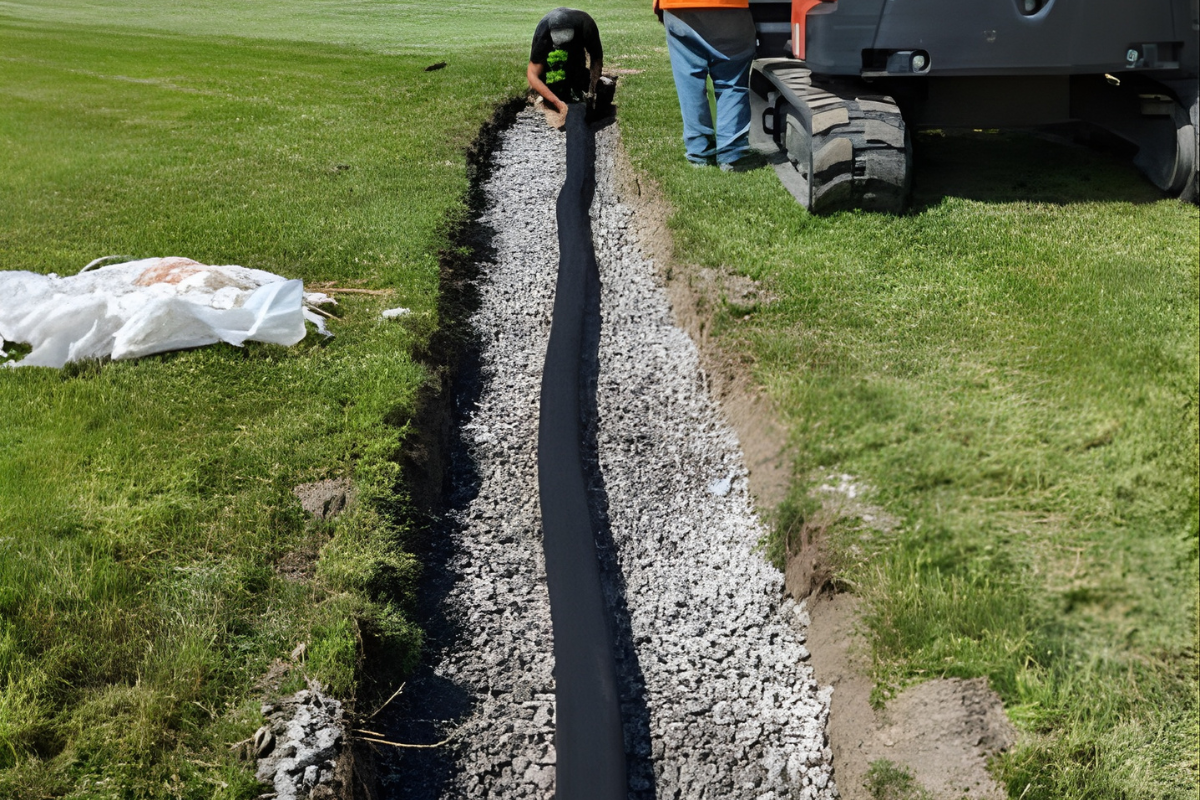
Drainage improvements are some of the most impactful summer property projects available to Ontario homeowners dealing with wet yards, basement water infiltration, or recurring surface flooding. French drains, swales, catch basins, and perimeter drainage systems all require precise ground preparation to function as intended.
A drainage system is only as effective as the grading and soil conditions that support it. If the surrounding ground slopes toward a structure rather than away from it, or if compacted clay prevents water from moving laterally, even a well-designed drainage system will underperform. Ground preparation for drainage projects involves reshaping the landscape to redirect flow, improving soil permeability where possible, and ensuring that drainage infrastructure connects to appropriate outlets.
Ontario homeowners often underestimate the relationship between surface grading and basement water problems. In many cases, poor lot grading directs rainwater and snowmelt toward foundation walls. It seeps through cracks or exerts hydrostatic pressure against the structure. Correcting this through targeted excavation and grading represents one of the highest-value summer property projects available for protecting a home’s structural integrity and interior environment.
Retaining Walls, Outbuildings, and Structural Additions
Summer property projects that involve retaining walls, sheds, garages, or other structures require ground preparation that matches the load-bearing demands of the finished addition. A retaining wall built on improperly compacted fill will shift and fail as the soil beneath it moves seasonally. An outbuilding set on a shallow, unprepared base will settle unevenly and become difficult to use or maintain.
Compaction is a critical step in preparing ground for any structural addition. Excavation professionals use compaction equipment to achieve consistent density throughout the subbase. This reduces the risk of differential settling that causes walls to lean, floors to crack, or doors and windows to bind. For larger structures, soil bearing capacity tests may be required to confirm that the prepared ground meets the load requirements.
Retaining walls in Ontario also face pressure from frost heave during winter and spring thaw. Proper drainage behind the wall, combined with appropriate base depth below the frost line, ensures the wall maintains its structural integrity across multiple seasons. This freeze-thaw resistance begins with the ground preparation work completed during the summer. Completed site preparation projects illustrate how correct base work translates to durable, long-lasting results.

Lot Grading and Long-Term Property Performance
Lot grading is one of the most broadly applicable summer property projects. It affects everything from drainage and landscaping to foundation protection and septic performance. Proper grading establishes positive slope away from structures, prevents water accumulation in low-lying areas, and creates the conditions for consistent drainage across the entire property.
In Ontario, lot grading requirements vary by municipality. Many jurisdictions require grading certificates for new construction or significant lot alteration. These standards exist to protect adjacent properties from drainage impacts and to ensure that surface water is managed responsibly. The Ontario Building Code provides regulatory context for grading standards that apply to residential and commercial development across the province.
Homeowners planning multiple summer property projects benefit from addressing lot grading early in the planning sequence. Grading decisions affect where drainage systems are routed, how septic systems are positioned, and where structures can be placed without water management issues. Tackling grading as a foundational step rather than an afterthought reduces the likelihood of costly rework when later phases of the project encounter drainage or stability problems.
Planning Summer Property Projects With the Right Professionals
A driveway or drainage system that performs consistently decade after decade proves the quality of the site preparation work the excavation team completed before touching the surface. Conversely, projects that skip or rush ground preparation tend to produce early failures that require expensive correction.
Working with qualified excavation professionals from the earliest planning stages ensures that site conditions are properly evaluated, soil challenges are addressed proactively, and the preparation work supports the full lifespan of the finished project. Ontario’s climate, soil variability, and seasonal extremes make this expertise particularly valuable for homeowners investing in meaningful property improvements.
Summer property projects represent a significant investment of time, money, and planning. Protecting that investment begins below the surface, where proper ground preparation creates the stability, drainage, and structural support that every successful outdoor improvement depends upon. Homeowners ready to begin planning their summer work can connect with our team to discuss site conditions and determine the right approach for their specific property.