
Sourcing quality soil and gravel ranks among the most practical decisions a property owner can make. Whether the project involves grading a driveway, backfilling a foundation, installing a septic system, or improving drainage across a rural lot, the material used underneath determines how well the surface performs over time. Choosing the right materials from reliable sources makes a meaningful difference in long-term property stability.
Understanding what constitutes quality soil and gravel, where to find it responsibly, and how placement affects drainage and compaction helps homeowners avoid costly corrections after the work is done.
Why Material Quality Matters More Than Price
Many property owners focus on the upfront cost of fill material without considering what poor-quality soil or gravel actually costs over time. Soil mixed with organic matter, debris, or excessive clay content compresses unevenly and does not support proper drainage. Gravel that lacks appropriate gradation can shift under load, create water pooling, or fail to compact adequately beneath a driveway or pad.
Quality soil and gravel sourced from reputable suppliers meet specific gradation and composition standards suited to their application. Clean crushed stone, well-graded gravel, and properly screened topsoil each behave differently and serve distinct purposes on a property. Using the wrong material for a given application, regardless of cost, typically leads to settlement, erosion, or drainage failure that requires excavation and correction.
Ontario’s Building Code Act and related site standards reinforce the importance of using appropriate fill and subgrade materials. Regulatory guidance exists in part because inadequate fill can compromise structural integrity. These factors have also been known to contribute to environmental issues such as runoff contamination and soil erosion.
Types of Quality Soil and Gravel Commonly Used in Ontario
Different projects call for different materials. Clean crushed limestone is a popular choice for driveways, laneways, and base layers beneath asphalt or concrete. Its angular edges lock together under compaction, creating a stable surface that handles vehicle traffic well. Homeowners throughout rural Ontario rely on it for long-term lane maintenance because it sheds water effectively and resists rutting.
Granular A and Granular B gravel products follow Ontario provincial standards and are widely used in roadbed construction, driveway bases, and structural fill beneath foundations and slabs. These products meet specific gradation requirements that ensure proper compaction and load-bearing capacity.
Screened topsoil supports lawn establishment, garden beds, and grading work around buildings. Quality topsoil should be free of construction debris, excessive stone content, or weed contamination. Sandy loam is often preferred in Ontario for general grading because it balances drainage with enough organic content to support plant growth.
Clean fill, distinct from topsoil, serves as a structural base or bulk infill in areas requiring elevation change without surface planting. It should contain no organic waste, concrete chunks, or contaminated material. Excavation professionals evaluate which fill type suits each application based on depth, load requirements, and drainage expectations.
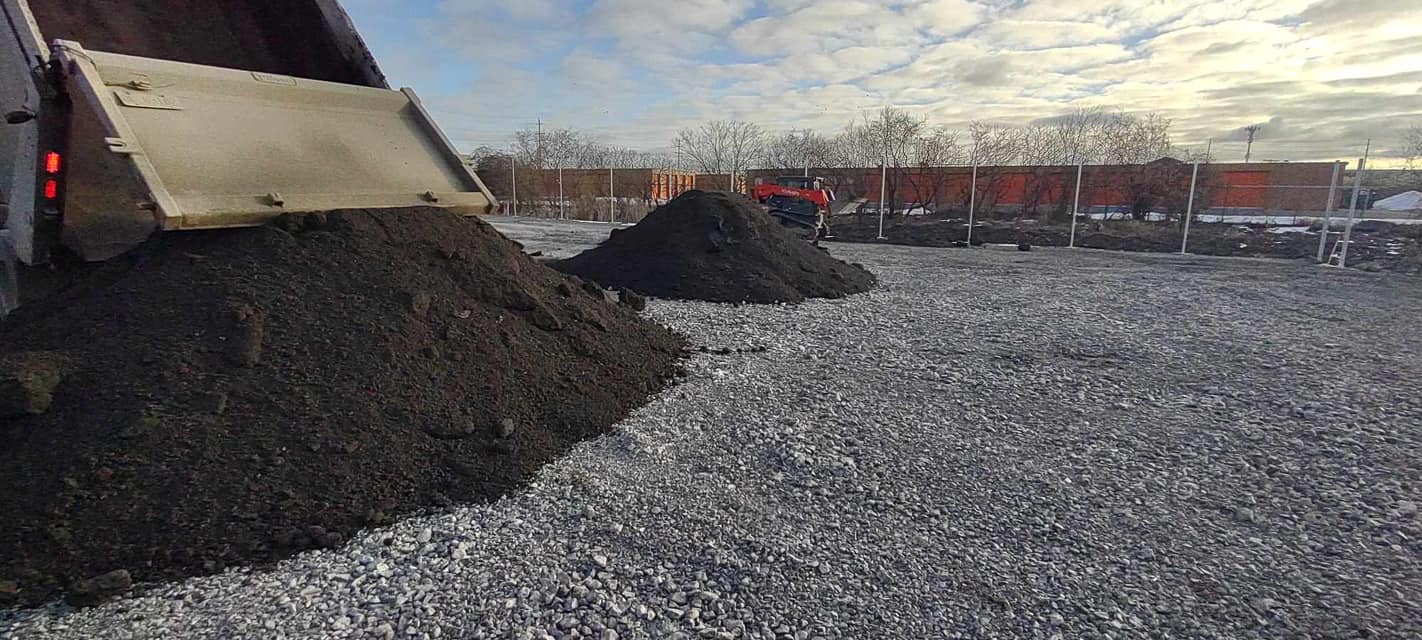
Where to Source Quality Soil and Gravel in Ontario
Reputable aggregate suppliers and licensed pits represent the primary sources of quality soil and gravel in Ontario. The province regulates aggregate extraction through the Aggregate Resources Act, which ensures that licensed operations meet environmental and quality standards. Purchasing material from licensed suppliers reduces the risk of receiving contaminated or substandard fill.
Many excavation contractors maintain established relationships with local aggregate suppliers and can source materials directly for the project. This simplifies logistics for the homeowner and ensures the material delivered matches the specification required for the work. Contractors who regularly source quality soil and gravel for client projects understand which suppliers provide consistent gradation, appropriate moisture content, and clean material.
Quarry operations across Ontario produce crushed limestone, granite, and mixed aggregate products in a range of sizes. These facilities screen and wash product before distribution, making quarry-sourced gravel among the most reliable options for structural applications. Homeowners near active quarry regions can sometimes arrange direct delivery, reducing transportation costs significantly.
Soil amendment and topsoil suppliers often operate alongside landscape material companies. These businesses blend screened loam and compost products for residential grading, garden bed construction, and lawn restoration. When reviewing suppliers, asking about the origin of the topsoil and whether it has been screened for debris, weed seeds, and contaminants helps property owners make an informed choice.
What to Watch for When Evaluating Soil and Gravel Suppliers
Not all suppliers offer the same quality standards. Before purchasing material, property owners benefit from asking specific questions about origin, screening processes, and material composition. Quality soil and gravel from a reliable source should arrive consistent in appearance, free of visible debris, and suited to the stated application.
Gravel should not contain excessive fines that retain moisture and reduce compaction performance. Topsoil should have a rich, loamy texture without a strong odour that might indicate decomposing organic material or sewage contamination. Clean fill should contain no visible concrete, asphalt rubble, or discoloured soil that might signal chemical exposure.
Requesting a material data sheet or gradation report from the supplier provides objective confirmation that the product meets Ontario provincial standards. Established suppliers who regularly work with contractors and government projects typically have this documentation available.
Completed site preparation projects throughout Ontario demonstrate how proper material selection contributes to long-term drainage performance, structural stability, and site appearance. The difference between a property that drains efficiently and one that pools water or settles unevenly often comes down to the quality of the materials placed during initial grading and fill work.
The Role of Site Assessment Before Material Delivery
Choosing quality soil and gravel represents only part of the equation. Delivering the right material to the right location in appropriate quantities depends on an accurate site assessment. Without proper evaluation of existing soil conditions, drainage patterns, and intended use, even the best aggregate can underperform.
A site assessment identifies whether the existing subgrade can support the proposed fill depth, whether compaction equipment can access the area safely, and where drainage must be directed to prevent saturation. Understanding existing soil composition also helps determine how new fill will integrate with native material over time.
Experienced excavation contractors conduct this evaluation before recommending material type, quantity, and placement method. Their expertise ensures that quality soil and gravel performs as intended across Ontario’s variable seasonal conditions, from spring thaw saturation to summer dry periods and winter freeze cycles.
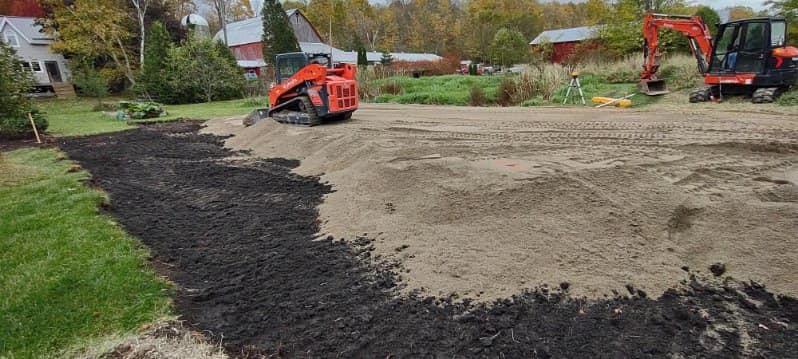
Placement and Compaction Determine Long-Term Performance
Even quality soil and gravel placed incorrectly can fail prematurely. Compaction lifts, moisture content during placement, and grading slope all affect how material settles and drains over time. Placing fill in layers and compacting each lift before adding the next ensures uniform density and prevents differential settlement across the surface.
Drainage grading should direct water away from structures and toward appropriate outlets. Flat or reverse-graded areas hold moisture that accelerates freeze-thaw damage and reduces the effective lifespan of driveways, lawns, and building foundations. Attention to slope during installation protects the investment in quality materials for years after the project concludes.
Planning Material Delivery Around Ontario’s Seasonal Conditions
Ontario’s climate adds seasonal complexity to material sourcing and placement. Frozen ground cannot accept fill compaction properly, and saturated spring conditions create similar challenges. Scheduling material delivery and grading work during stable weather windows, typically late spring through early autumn, produces the most reliable results.
Homeowners planning larger projects involving significant volumes of quality soil and gravel benefit from early planning. Lead times from aggregate suppliers can extend during peak construction season, and coordinating delivery with excavation scheduling requires advance communication. Working with an excavation contractor who maintains supplier relationships streamlines this coordination and reduces delays.
Making the Right Choice for Your Property
Sourcing quality soil and gravel from reputable, licensed suppliers protects the long-term performance of any property improvement project in Ontario. Whether the work involves a new driveway, foundation backfill, drainage correction, or general lot grading, material quality and proper placement determine whether the investment holds up over years of seasonal stress.
Property owners who understand what to look for, where to source materials responsibly, and how to work alongside experienced excavation professionals position their properties for lasting stability. Reaching out to a qualified excavation team early in the planning process ensures material recommendations align with site conditions, project scope, and Ontario-specific requirements from the start.
Get a Free Quote on Topsoil and Gravel
Get a free quote today. Call M. Riddle Excavating at 613-545-7955 or request a free quote online. Learn more about our soil and gravel supply across the Kingston area.