
Heavy rain can cause significant damage to a septic system, and Ontario homeowners often underestimate how vulnerable their onsite wastewater infrastructure becomes during and after major rainfall events. Unlike municipal sewer connections, private septic systems depend entirely on soil conditions, drainage patterns, and system capacity to function properly. When prolonged or intense rainfall overwhelms those conditions, the consequences can range from temporary performance issues to costly structural failures that require full system replacement.
Understanding the relationship between rainfall and damage to a septic system helps property owners take timely action. Ontario’s clay-heavy soils and high water table areas add additional complexity, making local knowledge and professional assessment essential when problems arise.
How Rainfall Creates Damage to a Septic System
A septic system relies on unsaturated soil to absorb and filter treated wastewater that exits the leaching bed. During heavy rain, the surrounding soil absorbs large volumes of surface water and groundwater simultaneously. When that soil becomes fully saturated, it loses its ability to accept effluent from the system. The result is a hydraulic overload that forces wastewater back up through the distribution pipes or to the surface, where it poses serious health and environmental risks.
Damage to a septic system from rainfall does not always appear immediately. In some cases, soil saturation reduces absorption capacity gradually over several days. Homeowners may notice slow drains, gurgling sounds from fixtures, or sewage odours both inside and outside the home. Recognizing these early indicators shortens response time and limits the extent of long-term harm.
Groundwater Rise and Its Effect on System Performance
When heavy rain falls over an extended period, groundwater levels rise and can reach the elevation of the leaching bed. Ontario’s Ministry of the Environment, Conservation and Parks recognizes that soil saturation and high groundwater are leading contributors to septic system failures across the province. Once groundwater infiltrates the leaching bed, it mixes with outgoing effluent and eliminates the treatment zone that keeps contaminants out of local water sources.
Homes built near rivers, streams, or low-lying rural areas face elevated risk. Properties where the water table sits naturally close to the surface have less buffer zone between the leaching bed and saturated ground. Excavation site assessments that evaluate these conditions before installation play a critical role in avoiding long-term damages.
Surface Runoff and Direct Inflow Into the System
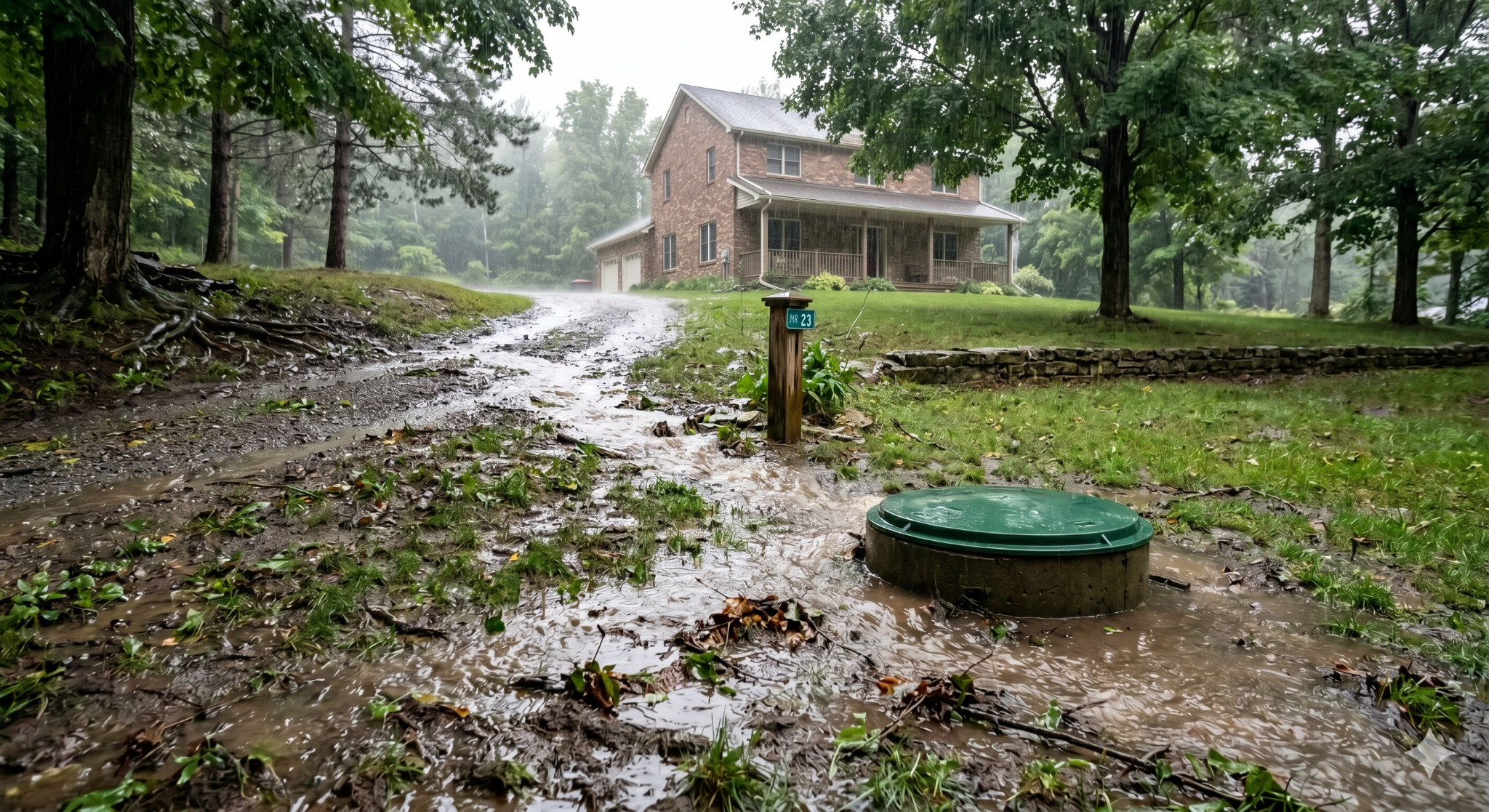
Heavy rain also creates surface runoff that can introduce excess water into a septic system through unexpected pathways. Cracked risers, poorly sealed lids, and deteriorated inlet baffles allow rainwater to enter the tank directly. That inflow dilutes the bacterial environment inside the tank and pushes partially treated solids into the leaching bed before adequate breakdown occurs. Solids that reach the distribution pipes clog the soil and accelerate the timeline toward full system failure.
Grading around the septic tank and leaching bed significantly affects how much surface water migrates toward system components. Sloped terrain that directs water toward the field increases saturation risk. Properly graded sites encourage drainage away from the system, protecting the surrounding soil from becoming oversaturated. Experienced excavation contractors evaluate and correct grading during installation and site rehabilitation work. This reduces the risk of rain-related damage to a septic system over the long term.
The Role of Soil Type in Determining Flood Risk
Not all Ontario soils respond to heavy rain in the same way. Sandy loam soils drain more rapidly and offer some resilience against short-duration rainfall events. Clay-based soils, which are common across much of rural Ontario, absorb water slowly and retain it for extended periods. Properties with clay soils face a higher likelihood of prolonged saturation that lingers well after the rainfall has stopped.
Damage to a septic system is also more likely on properties where topsoil was disturbed or compacted during construction. Compacted soil loses its natural porosity and cannot absorb water at the rate needed to protect a functioning leaching bed. The Ontario Onsite Wastewater Association emphasizes that soil quality and drainage are factors in system performance during extreme weather events.
Protecting Against Damage to a Septic System During Wet Seasons
Homeowners can take practical steps to reduce the risk of storm-related damage to a septic system. Redirecting downspouts, sump pump discharge lines, and foundation drains away from the leaching bed prevents artificial water loading during rain events. Any surface features that channel water toward the septic field should be corrected before wet seasons arrive.
Reducing indoor water usage during and immediately after heavy rainfall also helps the system manage the stress of saturated soil conditions. Running dishwashers, washing machines, and showers at reduced frequency gives the leaching bed time to recover and prevents additional effluent from compounding the hydraulic pressure already affecting absorption. Even small adjustments in daily usage habits provide meaningful protection when soil saturation is at its peak.
Maintaining the septic tank on a regular schedule prevents solids accumulation that becomes especially hazardous during wet conditions. A tank that operates near capacity before a storm has far less buffer against the additional inflow that heavy rain produces. Professional pumping and inspection, combined with routine visual checks of risers and lids, significantly reduce the potential for damage to a septic system caused by extreme rainfall.

What to Do When Rain Has Already Affected Your System
If a homeowner suspects that heavy rain has caused damage to a septic system, the first step is to stop or significantly reduce water use inside the home. Flushing, running taps, or using appliances adds effluent load to a system that is already under stress. Limiting usage buys time for soil conditions to improve and prevents immediate sewage backup into the home.
Homeowners should also avoid driving or placing heavy equipment over the leaching bed after significant rainfall. Saturated soil loses structural integrity and collapses under weight, permanently damaging the distribution pipes and aggregate bed beneath the surface. Foot traffic from people or animals also contributes to compaction that reduces long-term absorption capacity.
Contacting a qualified septic and excavation professional provides accurate diagnosis of the extent of damage and the options available for remediation. In some cases, rest and drainage are sufficient for recovery. In others, pipe rehabilitation, bed aeration, or full system replacement becomes necessary. Early professional assessment prevents homeowners from spending time waiting on a system that cannot recover without intervention.
Long-Term Implications of Repeated Rainfall Damage
Repeated exposure to heavy rainfall without adequate drainage protection shortens the functional life of any septic system. Each saturation cycle compresses the soil structure around the leaching bed, reducing absorption rates over time. Properties that experience recurring damage to a septic system from wet weather often face accelerated replacement timelines that far exceed the system’s designed service life.
Investing in drainage improvements, proper grading, and soil management following an initial rain-related event reduces the probability of recurring problems. Completed excavation and septic projects across Ontario demonstrate how strategic site preparation protects systems from the cumulative effects of wet seasons and storm events. Long-term planning that accounts for seasonal weather patterns and soil behaviour provides the most reliable protection against ongoing damage.
Preparing Your Property for Ontario’s Wet Season
Damage to a septic system from heavy rain is a serious risk for Ontario homeowners, particularly those on rural properties with clay soils, high water tables, or existing drainage challenges. Understanding how rainfall saturates soil, raises groundwater, and overwhelms system capacity enables property owners to take preventative action rather than waiting for visible failure.
Professional site assessment, proper grading, regular maintenance, and strategic drainage planning all contribute to protecting septic infrastructure through wet seasons and storm events. When rain-related issues do arise, prompt response and expert guidance prevent minor saturation problems from becoming expensive, long-term system failures. Protecting a septic system from weather-related damage is ultimately an investment in the stability and value of the property as a whole.
Get a Free Septic Quote
Get a free quote today. Call M. Riddle Excavating at 613-545-7955 or request a free quote online. We serve Kingston and Frontenac County.