
A percolation test report gives property owners and engineers critical data about how well soil absorbs water. In Ontario, this information directly shapes decisions about septic system design, lot suitability, and construction feasibility. Without understanding the results, homeowners risk misinterpreting key findings that affect their project from the ground up. Whether you are planning a new build, evaluating a rural property, or preparing for a septic installation, knowing how to read a percolation test report correctly saves time, money, and future complications.
Many property owners receive a percolation test report and struggle to connect the numbers on the page to real-world implications. This guide breaks down the components of a typical Ontario percolation test report, explains what results indicate about your site, and outlines next steps once you have your findings in hand.
What a Percolation Test Report Measures
A percolation test report documents the rate at which water moves through soil. This rate, expressed in minutes per centimetre or minutes per inch depending on the standard used, tells engineers and regulators how quickly effluent from a septic system will travel through the ground. Fast absorption rates suggest well-draining soil, while slow rates indicate denser soils that may struggle to handle wastewater disposal effectively.
Ontario’s regulatory framework requires percolation testing as part of the septic system approval process under the Ontario Building Code. Testing helps confirm that a leaching bed can function without causing surface pooling, groundwater contamination, or system failure. The percolation test report becomes a formal record that supports the design and permitting process. Its results determine what type of septic system the site can accommodate.
Key Components Found in a Percolation Test Report
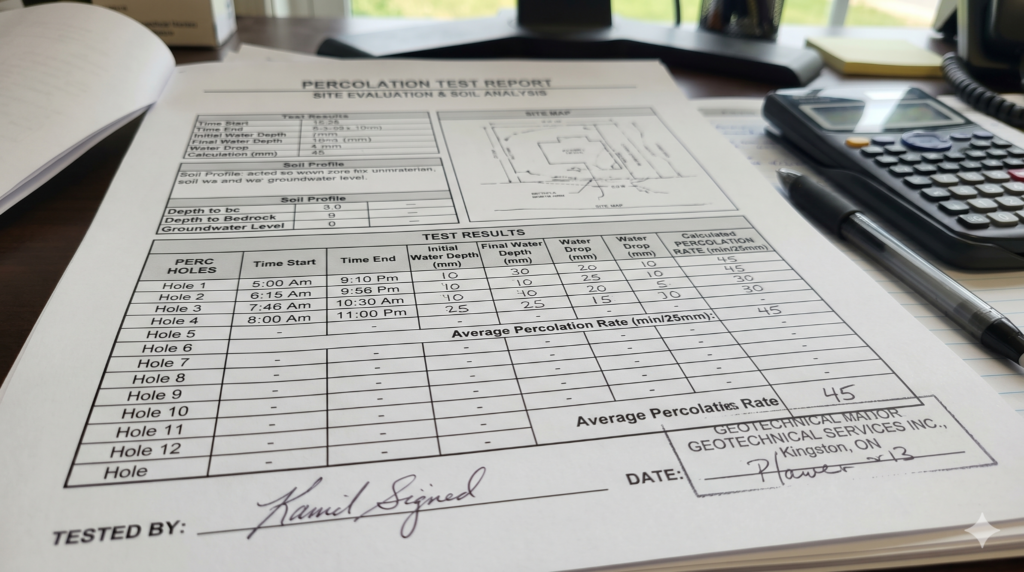
Most percolation test reports in Ontario include several consistent elements. The report typically identifies the test location, the depth at which testing occurred, the number of test holes or bores completed, and the time measurements recorded during water absorption trials. Each element contributes to a complete picture of how the site will perform under real conditions.
The percolation rate itself appears as the primary measurement in the report. This number reflects how many minutes it takes for water to drop one centimetre or one inch in a pre-soaked test hole. Lower numbers indicate faster absorption and generally more favourable conditions for a conventional leaching bed. Higher numbers suggest slower drainage and may require a modified or engineered septic solution. Understanding the difference between these outcomes helps property owners anticipate design requirements early in the planning process.
Many reports also include descriptive notes about soil texture, colour, and structure observed during testing. These observations provide context for the numerical results and help experienced professionals identify potential concerns such as restrictive layers, high water tables, or bedrock proximity. Excavation professionals evaluate this descriptive data alongside the perc rates to assess overall site suitability.
Understanding Percolation Rates and What They Mean for Your Property
Ontario guidelines use percolation rates to classify soils and determine the minimum leaching bed area required per person per day. Faster percolation rates generally correspond to smaller required bed areas, while slower rates require larger beds to compensate for reduced absorption capacity. When a percolation test report shows a rate that falls outside acceptable limits, the property may not qualify for a conventional septic system.
Rates that are too fast can also present problems. Extremely rapid absorption, often seen in coarse gravelly soils or fractured rock, may indicate insufficient filtration of effluent before it reaches groundwater. In these cases, engineering assessments and enhanced treatment systems may be required to protect water quality and meet provincial standards.
The Ontario Ministry of the Environment, Conservation and Parks provides guidance on how percolation data connects to system design requirements. Reviewing this resource alongside your percolation test report helps clarify what your results mean in the context of Ontario regulations.
How Site Conditions in Ontario Affect Percolation Test Results
Ontario’s soil conditions vary significantly across the province. Southern Ontario often features clay-heavy soils that drain slowly, while the Canadian Shield regions encounter thin soils over bedrock. Sandy loams common in parts of eastern Ontario tend to perc quickly. Each condition affects the percolation test report differently and demands tailored design responses.
Seasonal timing also influences test outcomes. Percolation testing completed during spring thaw or periods of high groundwater saturation may return slower rates than testing done during drier summer months. Ontario regulators and qualified engineers account for these variables when reviewing a percolation test report, and in some cases additional seasonal testing may be recommended to ensure accuracy.
Frost depth, drainage patterns, and proximity to surface water bodies all factor into how well a site performs over time. Properly assessing site conditions before and during testing provides the full context needed to interpret a percolation test report with confidence.
Who Conducts and Certifies a Percolation Test Report in Ontario
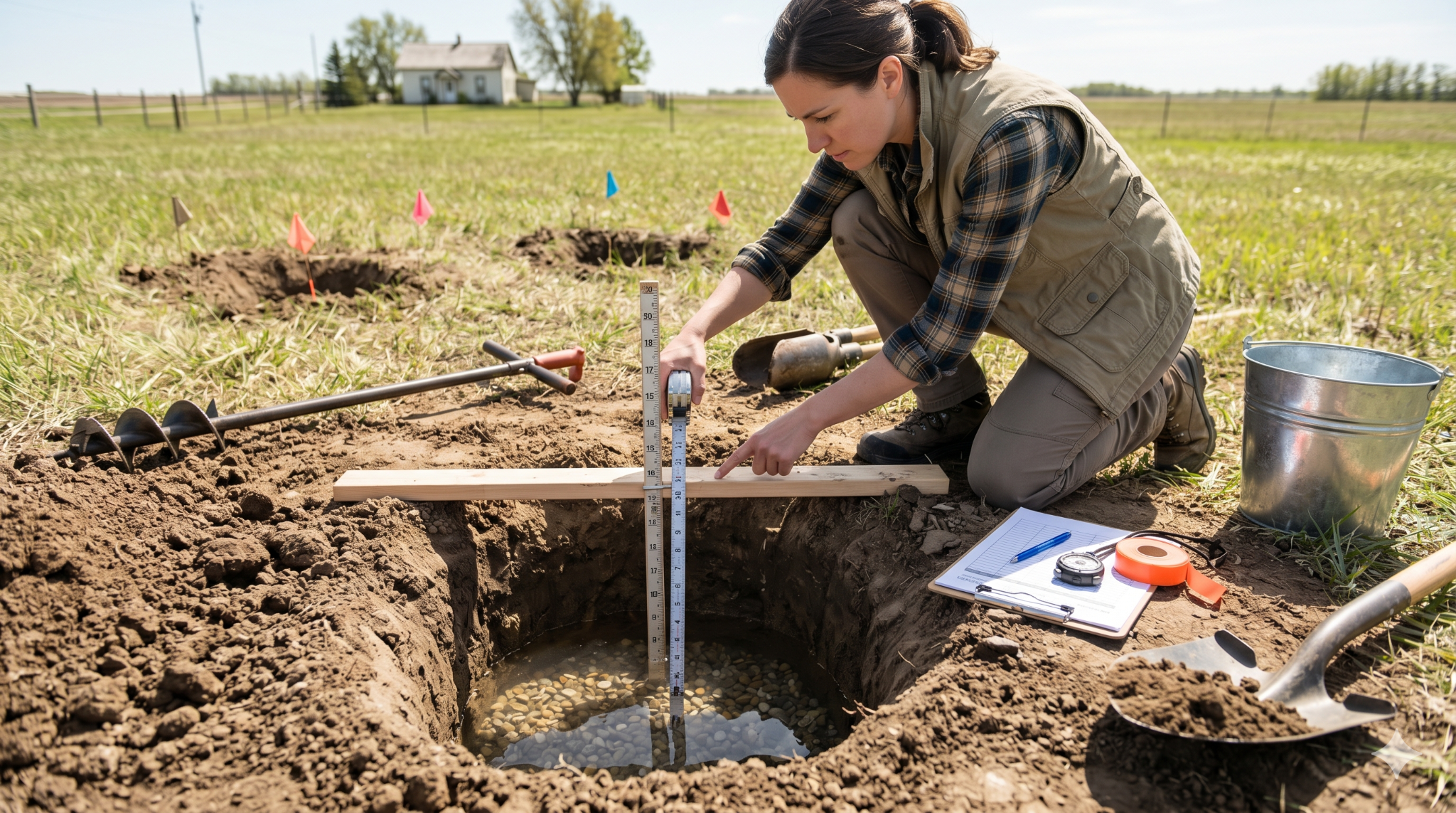
In Ontario, percolation testing must be conducted by a qualified person recognized under the Building Code Act. This typically means a licensed engineer, certified designer, or qualified inspector with the credentials to perform and interpret subsurface testing. The percolation test report they produce carries professional authority and becomes a formal submission document for septic permits.
Property owners should confirm that whoever conducts their testing holds current Ontario credentials. A report prepared by an unqualified individual may be rejected during the permitting process, causing delays and added costs. Working with experienced site professionals from the start prevents these complications and ensures that the percolation test report meets the standards expected by local health units and building departments.
Once testing is complete and the report is finalized, the document is submitted as part of the overall septic system application. Qualified excavation contractors familiar with Ontario permitting processes can help coordinate between the testing professional, system designer, and regulatory authorities to keep the project moving efficiently.
What to Do Once You Have Your Percolation Test Report
After receiving a percolation test report, the next step involves working with a septic designer to translate the findings into a system design that meets Ontario requirements. The designer uses the perc rate, soil observations, lot dimensions, and setback requirements to create a design that fits within provincial guidelines.
If the percolation test report reveals challenging conditions, alternative septic designs may be required. These include raised bed systems, engineered fill systems, or advanced treatment units depending on the site constraints identified. Understanding the limitations your report reveals early allows for realistic budget planning and timeline management before breaking ground.
Property owners purchasing rural land should treat a percolation test report as essential due diligence. A parcel that cannot support a functioning septic system carries significant limitations on its development potential. Reviewing the report with a qualified professional before finalizing any purchase protects buyers from committing to land that does not meet their intended use.
Completed examples of septic and excavation projects across Ontario illustrate how varied site conditions translate into real project outcomes. These case references provide helpful context when reviewing your own percolation test report findings.
Connecting Percolation Results to Long Term Site Performance
A percolation test report is not just a permitting requirement. It is a diagnostic tool that reveals how your land interacts with water over time. Sites with marginal perc rates require more careful grading, drainage management, and leaching bed maintenance to perform reliably across all seasons.
Homeowners who understand their percolation test report results are better positioned to make informed decisions about landscaping, surface drainage, and future land use. Avoiding activities that compact soil above a leaching bed, directing stormwater away from the septic field, and scheduling regular septic maintenance all become more meaningful when grounded in an understanding of the site’s natural drainage behaviour.
The Ontario Onsite Wastewater Association offers guidance on operating and maintaining septic systems in ways that preserve long term function. Pairing this knowledge with the specifics of your percolation test report creates a strong foundation for responsible site stewardship.
Making Sense of Your Percolation Test Report
Reading a percolation test report does not require engineering expertise. However it does require knowing which values matter and what they mean for your specific Ontario property. The perc rate, soil descriptions, test depth, and site conditions documented in the report all work together to tell the story of how your land handles water. Understanding that story allows you to plan septic installations, evaluate property purchases, and manage your site with clarity and confidence.
Percolation test report results that seem complex at first become straightforward once the key concepts are in place. Partnering with experienced site professionals who understand Ontario’s regulatory environment and soil conditions ensures that the data translates into practical, code-compliant decisions. For guidance on site preparation, excavation planning, and septic system coordination across Ontario, connect with a qualified excavation professional who can support your project from initial testing through final installation.
Get a Free Septic Quote
Get a free quote today. Call M. Riddle Excavating at 613-545-7955 or request a free quote online. Learn more about our septic system design and installation in Kingston and Frontenac County.